The breeding of horses for racing has been commonplace in society for centuries and their lineage can be traced back through the ages.
Through years and years of record keeping, people have been able to track bloodlines back to the 17th century and this plays a pivotal role in shaping the career of a racehorse.
Factors such as whether or not a horse would be more or less suited to flat or jumps racing, the distance they will be most effective at and the type of ground that will suit them the most can all be anticipated through their breeding.
What is a Sire and a Dam?
When somebody in racing discusses the Sire or Dam of a specific horse, they are just referring to its parents.
These terms are the most common phrases relating to the breeding of horses with 'Sire' used to describe the father and 'Dam' used to describe the mother.
It is often said that a horse is 'by' a sire and 'out of' a dam.
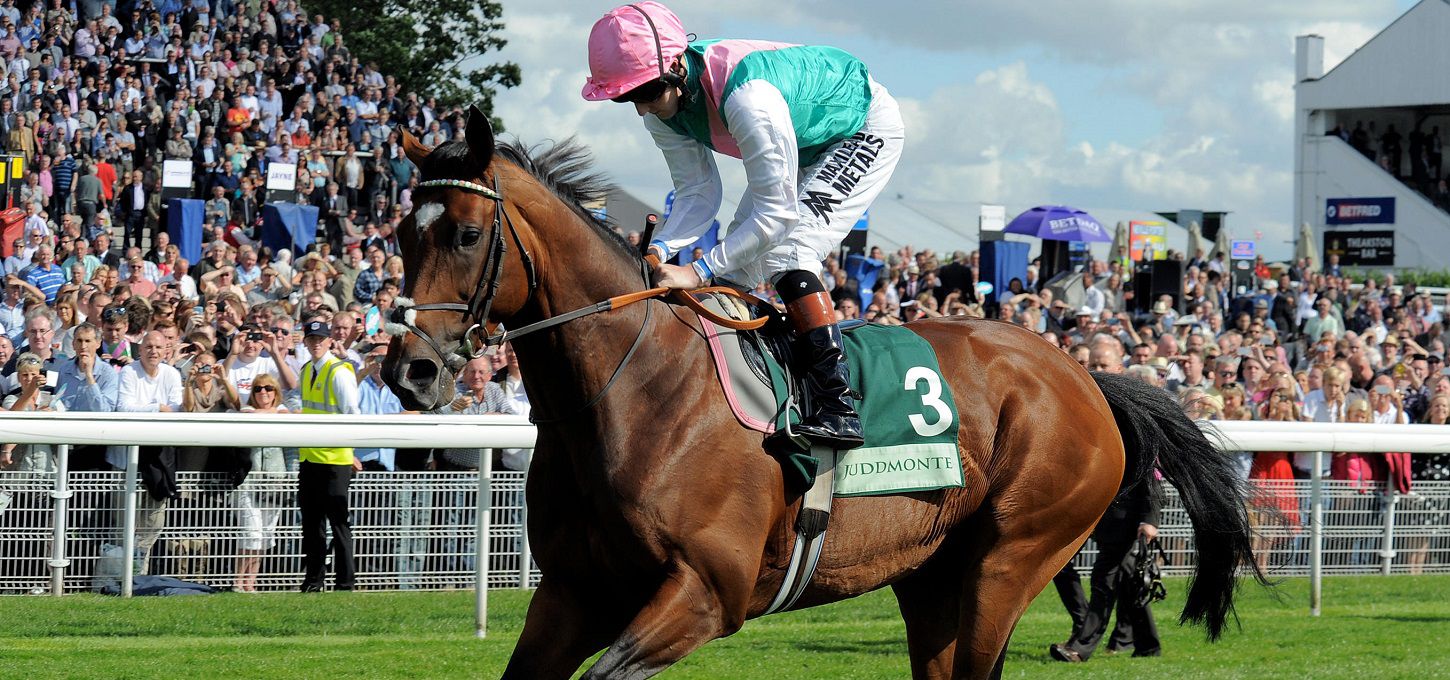
For example, Frankel, one of the greatest racehorses of the modern era, was fathered by Galileo and mothered by Kind.
Therefore, he is 'by' Frankel and 'out of' Kind.
Sires are often of great commercial value to breeders as the best of them can end up standing at stud as a stallion.
People within racing often refer to a stallion's 'stud fee', which is how much it costs to breed your mare with him.
The aforementioned Frankel now stands at Banstead Manor Stud for a fee of £350,000. He was selected to head to stud not just because of his excellent racing career but also because of his strong breeding lines.
His stud fee started at a lower figure but has gradually increased due to the quality of his offspring.
Greatest sires in racing history
Northern Dancer
North American-based Northern Dancer was considered a game changer by almost everyone within the breeding industry.
His exploits on the track were elite, successful in both the Kentucky Derby and Preakness Stakes, but it was his exploits as a stallion that sealed his place in racing folklore.
His retirement came just around the time that selling stock from America to Europe was taking hold and when his second-crop son Nijinsky came along, Northern Dancer became all the rage.
Nijinsky's trainer Vincent O'Brien quickly snapped up Northern Dancer's stock and he managed to sire Derby winner The Minstrel as well Classic winners El Gran Senor, Lomond and Sadler's Wells.
As anticipated, the Northern Dancer line can be seen right through to the greats of racing even today with Minnie Hauk, Sir Delius and Lake Victoria all distant relatives.
Galileo
Since the turn of the century, no sire has received more praise than Galileo.
The 2001 Derby winner was exceptional on the track but his importance at stud is what he will be remembered for.
At the time of his death in 2021, such is his lasting impact on the breed, Galileo had sired 20 different sons who themselves became sires of Group or Grade 1 winners.
Sadler's Wells
A son of Northern Dancer and the sire of Galileo, there is an argument to suggest that Sadler's Wells is the greatest of them all.
Standing at Coolmore in Ireland, his initial stud fee in 1985 was an eye-watering £125,000, which is around about £500,000 in today's money.
Due to the success across his first five years, his fee increased to £150,000 and by the turn of the century this number was up to £200,000.
Sadler's Wells didn't just sire some of the greatest racehorses in history but he was able to produce great racehorses across both the jumps and flat game, across varying distances.
Galileo is his most famous progeny but he was also responsible for multiple Champion Hurdle winner Istabraq and four-time Ascot Gold Cup winner Yeats.