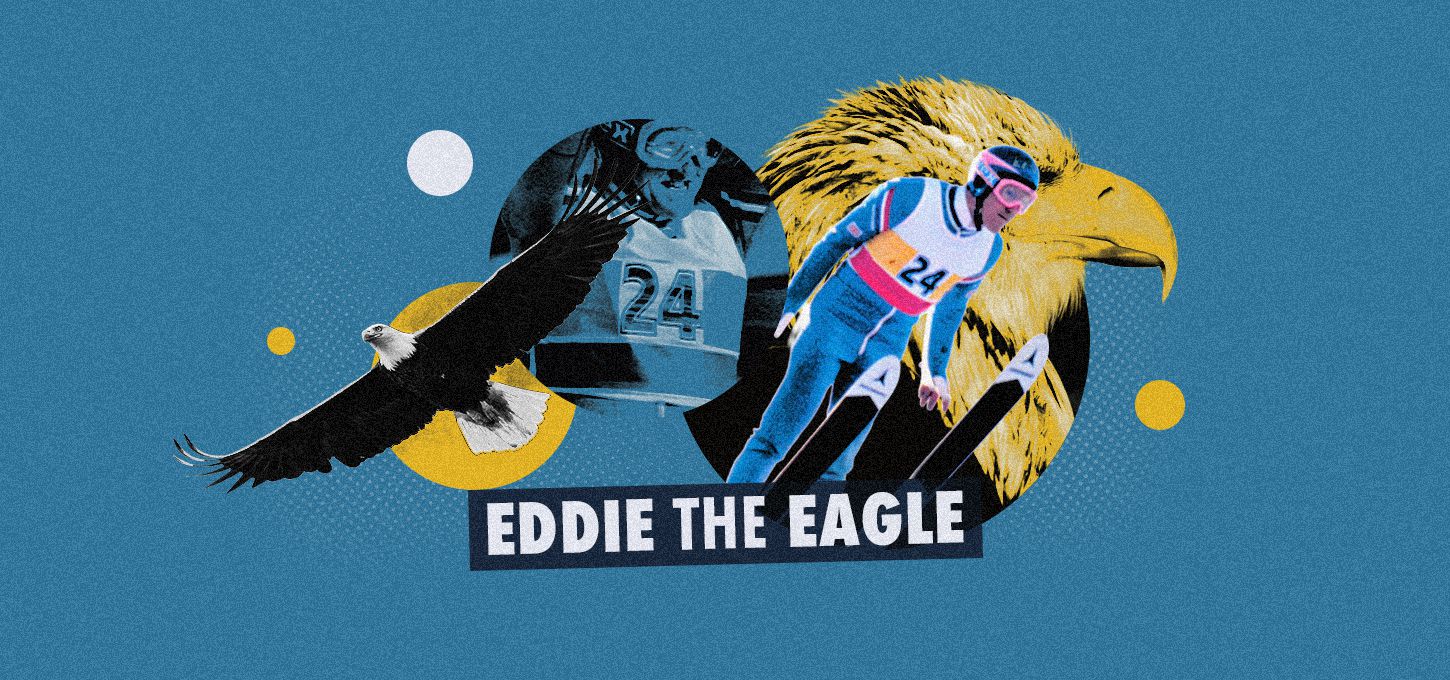
He is one of Britain's most famous Winter Olympians who soared through the sky and into the hearts of the nation.
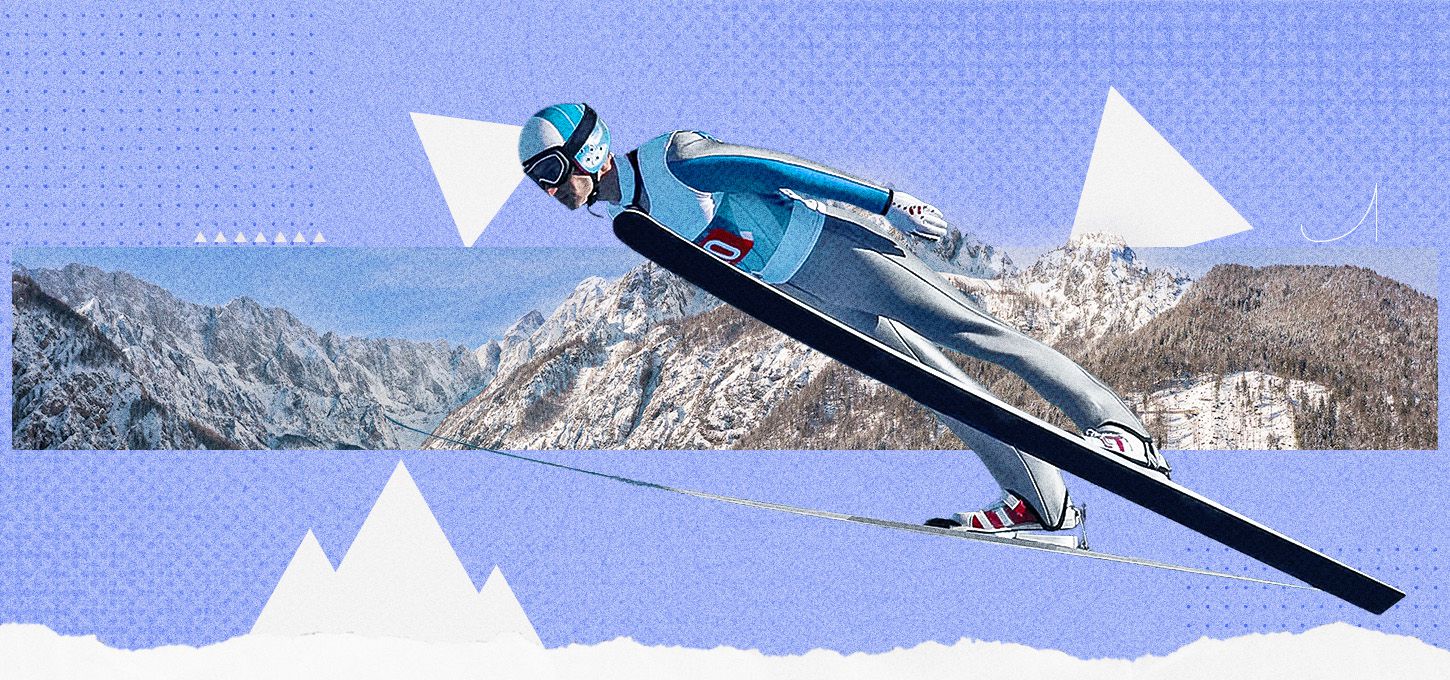
Eddie 'the Eagle' Edwards became Britain's first ski jumper to compete at a Winter Olympics back at Calgary 1988 and despite finishing dead last in both events he competed in, Edwards remains a household name with a lasting legacy in the sport.
Background
Born in Cheltenham, Gloucestershire, he initially ventured into snow sports by competing in ski slalom and Alpine skiing before obtaining his licence to ski abroad.
Edwards failed to make Great Britain's 1984 Olympic team in downhill skiing, and the costs involved with skiing ultimately pushed him into the path of ski jumping, which was considerably cheaper to compete in - saving him nearly £200 a day.
Everything suggested Edwards would never make it as an Olympic ski jumper; he weighed 9kg more than the heaviest competitor, had no financial support from federations and was far-sighted, with Edwards wearing a pair of thick, distinctive glasses under his googles which would steam up at altitude.
He was repeatedly told by coaches he wouldn't be able to jump far, but it didn't dissuade Edwards from pursuing his lifelong dream of becoming a Winter Olympian.
To qualify for the Games, the British Ski Federation outlined competitors needed to successfully land a jump of 50 metres in a World Cup competition, which they then changed to 55 metres. Edwards achieved both, landing a jump of nearly 70 metres at the 1987 World Championships in Oberstdorf; he'd only attempted his first ski jump 10 months before his first World Cup competition.
He was informed of his qualification for the 1988 Winter Olympics whilst working as a plasterer.
1988 Winter Olympics
Edwards competed in both the 70m and 90m ski jumping events at the 1988 Winter Olympics in Calgary.
In the 70m, he finished last whilst achieving a score of 69.2 from two jumps at a distance of 55m. For comparison, the athlete who finished second-last - Bernat Sola Pujol of Spain - scored 140.4 points from jumps of 71m and 68.5m.
Edwards was again rooted to the bottom of the standings in the 90m event, scoring a total of 57.5 points. He was more than 40 points adrift of the second-lowest score recorded by Canada's Todd Gilman, while the victor Matti Nykanen of Finland achieved a total of 224 points. Edwards' longest jump was 71m, compared to Nykanen's best distance of 118.5m.
Despite his last-place finishes, Edwards still set a British record for ski jumping, which he held until 2001.
Read our Guide to Ski Jumping at the Winter Olympics
"Eddie the Eagle" Rule
As Edwards' performance in the 1988 Winter Olympics fell so far below elite level, the International Olympic Committee tightened the entry requirements for ski jumping.
To qualify for any subsequent Winter Games, athletes needed to be placed in the top 30% of competitors or rank in the top 50. The ruling later became known as the 'Eddie the Eagle Rule'.
Edwards failed to qualify for the 1992, 1994 and 1998 Winter Games.
Biopic
In 2016, the film 'Eddie the Eagle' was released, chronicling the life story of Edwards and his path to the 1988 Winter Olympics.
Edwards was portrayed by Kingsman star Taron Egerton, while the legendary Australian actor Hugh Jackman portrayed Edwards' coach, Bronson Peary.
The film was a hit in the UK, grossing $12.8m to make it the highest grossing British film of the year.
Later Career
Edwards called time on his ski jumping career after failing to qualify for the 1998 Games in Nagano.
He graduated from Leicester's De Montfort University with a degree in law in 2003 and has made a series of TV appearances over the years, including Dancing on Ice, Channel 4's The Jump and ITV's British celebrity diving programme, Splash!