Football journalist and author Guillem Balagué talks about the progress being made at Barcelona and how they are being expertly guided by Hansi Flick.
What looked like a neck‑and‑neck sprint for the Barcelona presidency on March 15 turned into a rout. Joan Laporta didn’t just win — he steamrolled it, grabbing 68.18% of the vote while Víctor Font was left stranded on 29.78%.
And Laporta made sure everyone saw who was boss, dancing, as they came to vote, with Dani Olmo and Pau Cubarsí as if to say: this is my club, my players, my future.
Most Barça fans, perhaps recognising the scale of the challenge and certainly in a good mood as the men’s first team is doing so well, have largely chosen to back the project and move forward.
A debt in excess of £2 billion? A daunting inheritance for any president. A complex stadium project entrusted to Limak, which has faced delays and scrutiny? Part of the risk that comes with trying to fast-track long-overdue infrastructure.
Laporta also had to navigate one of the most painful chapters in the club’s history: the departure of Lionel Messi under strict financial constraints. The player does not talk to Laporta. That did not have much of an effect in the elections either.
In response to the difficulties, the president made bold decisions, including activating financial levers to keep the club competitive, while delegating key responsibilities within his trusted circle, including his former brother in law, Alejandro Echevarría, who at some point was the patron of the Francisco Franco foundation. That has also been ignored.
Unfortunately for Victor Font, he faced two insurmountable hurdles. As mentioned, Barcelona are winning and secondly, one of the main reasons they were winning was because amidst the pandemonium and sheer chaos that Barcelona had undergone over the past few years, Laporta had hired Hansi Flick to get the Blaugrana show back on the road.
Font’s pitch — that a €1b‑a‑year club should be run like a global corporation, not a family business — made sense on paper. But voters looked at the scoreboard, looked at Flick, and said: “Thanks, but we’re good.”
When Flick arrived at Barcelona, Laporta handed him a letter that was a symbolic gesture and almost a manifesto. At its core was Johan Cruyff’s founding vision, the identity he imprinted on the club and, by extension, on football itself.
Ten years after Johan left us, why is he still so important, you might ask: because his true revolution went beyond tactics. When he arrived in Spain in the mid-1970s, he transformed two cultures at once: a Barcelona weighed down by a sense of victimisation against the powerful Real Madrid, and a Spanish football identity built around “furia” — intensity, physicality, ‘balls’. Cruyff, pragmatic yet obsessed with beauty, shifted the focus toward giving the ball to those who could truly understand and care for it.
He even found inspiration in the Quinta del Buitre, admiring their talent despite their Real Madrid ties. That philosophy later found its perfect conduit in Pep Guardiola, who helped turn Cruyff’s ideas into a lasting, generational framework embedded in La Masia.
A decade since his passing, Johan Cruyff’s presence can be seen in Flick’s team.
This is a side that feels comfortable in quick transitions — something Johan embraced as well — bold, attacking, occasionally fragile, but committed to the idea that how you win matters as much as winning itself. An imperfect, open, vibrant Barça… unmistakably Cruyffian.
I spoke to Hansi back in February of 2024 when in an 'off the record' chat he told me he was 'studying' Barcelona and wanted to know more about the club. I believe that he already knew by then that he would be coming to the club, even though Laporta had just confirmed Xavi Hernandez as a manager.
He had long suffered from persistent back pain since retiring as a player, an issue that only led to surgery after his departure from the German national team. Now feeling better, that period still lingers in his memory — a time when everything hurt, physically and mentally. It has shaped his outlook. More than anything, it reinforced the importance of being in a place where you feel comfortable and at peace.
That is why, when he says that ‘if’ — and really, ‘when’ — he renews his contract at Barcelona, it will be his last job in football, it reflects not just a professional decision: he wants to enjoy the present while he can, aware that the pain, in one form or another, may return.
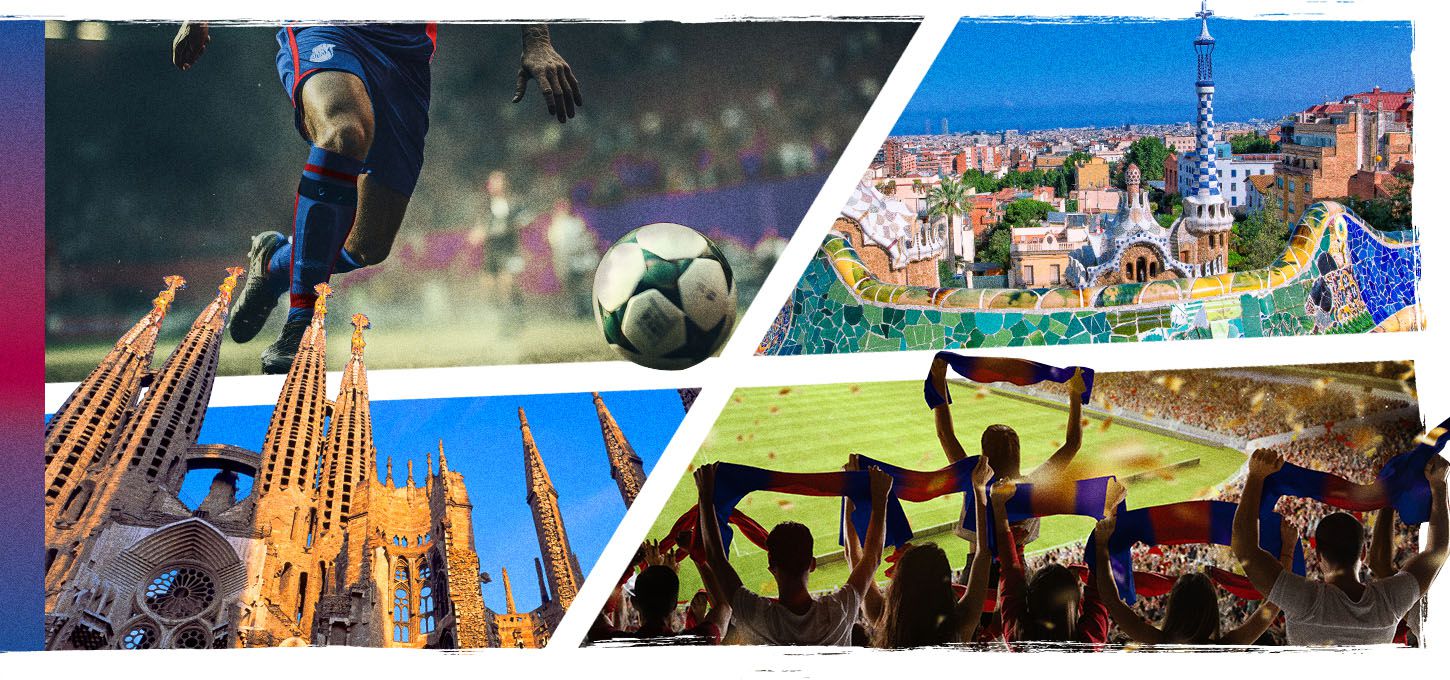
Flick has brought exactly what Barça had been begging for: synergy, stability and success. The German manager connects effortlessly with both the president and the squad — from the youngsters to the veterans. His secret sauce is a mix of tactical conviction and people skills — plus that disarming smile. To succeed at the very highest level in football what is required is both technical acumen alongside man-management skills, as a starting point to his charm offensive with various players who see him in different ways according to their age and stature.
To Robert Lewandowski, 37, he’s a brother. Lewandowski, after a spell not scoring, hit a brace vs Newcastle, setting an age record. Laporta may renew the Polish striker if he reduces his wages drastically, but Barça are eyeing Julián Álvarez, Harry Kane and João Pedro. Flick knows all of it and is trying to protect the striker.
To Cubarsí and Lamine Yamal, he’s a father figure. So when a substituted Lamine Yamal has that face that screams, "I've got the hump", Flick knows how to deal with him better than anyone, when to use the arm around the shoulder, to explain, or to simply ignore him.
Flick considers himself deeply influenced by Cruyff, and like the Dutchman, he is drawn to the extreme edges of the game. Where Cruyff once challenged convention by defending with a high line and few players at the back, Flick pushes that same idea further, turning the offside trap into a proactive weapon, something to provoke, to distract, to force decisions of the rivals. In fact Flick is reshaping Barça into a transition‑heavy team rather than the possession machine of old. It’s not classic Barça DNA, and winning has a funny way of rewriting tradition, but it is closer to Cruyff’s Barcelona that you would think. And with players like Raphinha, Lamine Yamal, Fermín and Ferran, fast transitions feel natural anyway.
With the manager’s total trust, Barcelona’s academy is delivering huge value. This season, Flick has used 14 La Masia players, with first-team graduates and youth talent combining for around €650M in value. Lamine Yamal (€200M) leads the way. In fact, Barça’s homegrown talent alone is worth more than Atlético Madrid’s entire squad and far exceeds Real Madrid’s academy output.
A couple of months ago, the squad even asked him to drop the defensive line 15–20 metres in certain phases. He listened. They adjusted. It worked. But as the Newcastle United tie showed, this is still a young team that can get swept up in the chaos of a game. Newcastle’s man‑to‑man approach dragged Barça into a style that didn’t suit them until Pedri, Bernal, Fermín and Lamine Yamal took control in the second half of the return leg.
So yes, there are still two Barcelonas: the breathtaking attacking force Diego Simeone himself calls the best in Europe on their day, and the fragile, emotional version that can be exposed by teams who know how to attack that high line.
And now comes Atlético in the quarter‑finals — a fixture that has twice ended in heartbreak for Barça in the knockout stages. Flick knows the risks of his approach, but he also knows he has enough firepower to “pull the chestnuts out of the fire,” as they say in Spain. They came close last year against Inter. This time, they genuinely believe they can go one better.
The last time Barça won the UEFA Champions League was 2015. Lamine Yamal was seven. Cubarsí was eight. These players have never tasted the glory or the trauma — no Roma, no Bayern, no Liverpool scars. They play free of hurt. And at the moment, so is Flick.