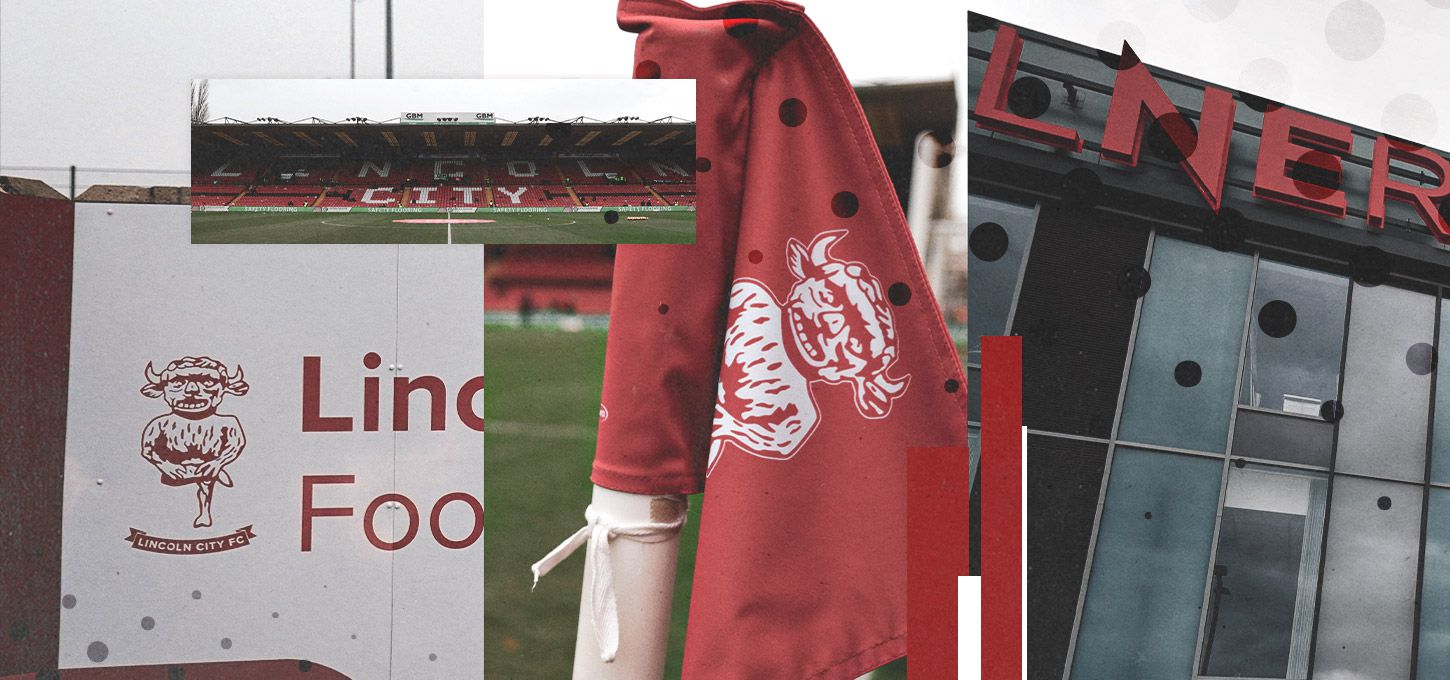
A return to the second tier of English football for the first time since 1961 is now a reality for Lincoln City.
Embarking on a club record unbeaten run, Michael Skubala's Lincoln extended their undefeated streak to 24 matches with a 2-1 win against Reading to become the first club in the EFL to win promotion this season.
The idea of such an achievement would have been unimaginable for any dedicated Imps supporter, especially during the club's six-year exile from the Football League. At risk of drifting into obscurity, their absence was ended when the Cowley brothers, Danny and Nicky, guided Lincoln to the National League title in 2016/17.
In less than a decade, Lincoln have gone from trips to North Ferriby United and Dover Athletic to possible away league fixtures at West Ham, Nottingham Forest or even Tottenham Hotspur, depending on the outcome of the Premier League relegation battle.
Lincoln's ascension has been steady. Whilst they never had the luxury of Hollywood's infinite resource to fund their climb up the Football League ladder like Wrexham, innovation and sustainability has been invaluable in enabling the club to develop without the risk of the perilous financial situation Lincoln found themselves in over two decades ago.
With promotion secured, Lincoln will now have their sights set on the League One title. Irrespective of whether they're crowned champions or not - and it would take an almighty shift in form for the Imps not to finish the season at the summit - their campaign has been the Football League's story of the year.
Overachieving against the big spenders
The arrival of South African businessman Clive Nates in 2016 was a seismic moment in Lincoln's history, and while they might not have been quite aware of the magnitude of their achievements at the time, the Cowley's were imperative to the club's progress.
In the middle of their run to National League honours in 2017, Lincoln advanced to a stage no non-league team had ventured before as they reached the quarter-finals of the FA Cup. Featuring the slaying of Ipswich Town, Brighton and Premier League Burnley, it was a miraculous run that earned Lincoln £2 million in prize money.
The seven-figure sum was subsequently invested into the development of their Elite Performance Centre Training base, which put the foundations in place for Lincoln to prosper and coincided with a return to the Football League.
Within two years the Imps had won the League Two title, achieved on a budget that was less than half of their promotion rivals. While the tenure of Cowley brothers regretfully concluded in the opening stages of their League One journey, Michael Appleton ensured consolidation in the third tier.
Many Imps supporters thought their dreams of playing in the Championship had vanished when the club were beaten 2-1 by Blackpool in the League One play-off final. A season in the bottom half of the table followed, and Mark Kennedy's unfruitful spell at Sincil Bank left a degree of unease that Lincoln were starting to lack the punching power to box above their weight.
Then Skubala arrived. Last year, the former Leeds United caretaker guided the club to within touching distance of a play-off berth, despite operating on a budget dwarfed by the likes of Birmingham City, Wrexham and Huddersfield Town, the clubs they were challenging.
This season, in terms of squad cost, Lincoln believe they rank in the bottom eight teams. Their shrewd investments are demonstrated by their agent fee spend, accounting for just 1.49% of League One's total outlay on agents - only fan-owned AFC Wimbledon and Exeter City spent less.
Lincoln's budget is around £5m, which according to sporting director Jez George, is roughly a third of the top financial allocations in the division.
Despite working on a modest budget, Skubala and his group of players have achieved maximum performance. It's hoped that the takeover by American Ron Fowler, who increased his stake in the Imps to more than 25% in February, will help them sustain their overachieving in the Championship.
Fowler, a former co-owner of MLB's San Diego Padres, is accompanied by ex-Everton and LA Galaxy striker Landon Donovan, who features on the board as a strategic advisor.
The Skubala effect
Prior to his appointment, Skubala had never held a full-time managerial role in the Football League, but very few of his counterparts could boast the same degree of coaching experience that the 43-year-old has accrued over the last decade.
Balancing his job as a PE teacher alongside coaching roles at the academies of Coventry City and Nottingham Forest, Skubala pursued a role as director of football at Loughborough University before he was headhunted by the Football Association to become head coach of the national futsal team.
Implementing a successful six-year strategy, Skubala transferred his futsal learnings into professional football and his ability to develop young players resulted in him taking the head coach position of Leeds United Under-21s. Within eight months he'd inherited caretaker duties of the first-team following the sacking of Jesse Marsch, where he impressed before handing the reins to Javi Gracia.
On the face of it, Skubala would be deemed a gamble, but Lincoln's data-led approach knew it was the perfect fit. More importantly, the innovative Skubala would be afforded the time to implement his methods and oversee the club's evolution.
Lincoln's success is of course not all down to Skubala, but he is the orchestrator; he is the one that keeps the Imps ticking in angelic harmony.
Lincoln chief executive Liam Scully, an instrumental figure in the appointment of the former Leeds United coach, said: “It’s corny, but when we talk about us, Michael is us; he gets us. There’s a natural fit. We’ve always been aligned. This effort takes a village but every ship needs a captain. Michael’s done a phenomenal job.”
Speculation is inevitable when a club is succeeding, so it was of little surprise to see Skubala linked to a hoard of Championship clubs when the chopping and changing cycle clicked into gear in the second tier.
Struggling West Brom and Leicester City showed interest, but Skubala has publicly stated that he is happy at Sincil Bank. Contracted for several more seasons, Lincoln will be optimistic their promotion means Skubala is committed for many more years to come.
Bringing long throws back into fashion
Whilst the long throw has been thrust back into the spotlight and become an increasingly prominent weapon in the Premier League this season, Skubala and his coaching staff have been utilising the 'sideline set-piece' with great success over the previous two years.
Beyond Tom Hamer's impressive ability to launch the ball over 30 metres, Skubala collaborated with the club's sports scientists and also utilised artificial intelligence to inform their decisions and work on specific angles from which Lincoln could capitalise in the opposition penalty area.
No team has scored more than Lincoln's 77 goals this term, and 27 of them have come through set-pieces - the most of any League One side. No other club has benefited from more own goals than the Imps, of which four of the five own goals scored in their favour have arose from the first phase or the second phase of a set-piece or long throw.
Although mastering the art of set-pieces may be deemed unfashionable, Lincoln's ability to outperform their financial resources stems from their unconventional approach. Rangers even acquired the club's set-piece coach Scott Fry earlier in the season, but goals from dead-ball situations have continued to flow.
Lincoln's critics point to them having the lowest average possession (42%) in League One, but they're by no means a long-ball team that are happy to camp in their own third.
Prioritising defensive solidity and characterised by their work out of possession, Lincoln's quick, flowing transitions showcase their speed and dynamism in attack. Players have habitually developed to read press triggers and when possession is retrieved, they overload in critical areas to exploit obvious weaknesses in the opposition.
With such a calculated style, there's always the danger of players being overcoached in the attacking third.
But Skubala provides a platform for his players to express their ingenuity in a controlled style where operating in tight spaces is encouraged. They don't take an abundance of shots - they've produced 160 less than statistical leaders Bolton - but they generate a greater quantity of higher-quality chances, and they're proving clinical.
Team unity
At the centre of most promotion-winning seasons you will find a talismanic figure who nets 20+ goals to propel them to glory, but not Lincoln.
Only Reeco Hackett has reached double figures for the club this season, and he is one of 18 different players to have found the net. Goals are sourced from all over the pitch; such a statistic is evidence of the camaraderie within the camp.
Speedster Jack Moylan has been a shining light for the Imps, netting nine goals and five assists this term. The forward was purchased from Shelbourne on a pre-contract agreement in January 2024 in yet another demonstration of Lincoln's shrewd and detailed recruitment. Ivan Varfolomeev, a Ukrainian refugee signed from Czech outfit Slovan Liberec in August 2025, shows the scale of their scouting network.
But for every obscure signing with vast potential, Lincoln have provided opportunities for those looking to resurrect their Football League careers. Tom Bayliss was once the next big thing at Coventry City, but after a forgetful spell at Preston North End, the midfielder found his career drifting. Joining Lincoln in August 2024, Bayliss has flourished under Skubala's tutelage.
Between the sticks, George Wickens is on a path to show Fulham exactly what they're missing after leaving his boyhood club in July 2024.
The defensive unit mostly consists of experienced operators. Tendayi Darikwa has promotion experience at Wigan Athletic, while Sonny Bradley has escaped League One with Luton Town and Derby County. Many considered Adam Reach's career to be nearing its end, but the former Sheffield Wednesday and West Brom ace had been pivotal for Lincoln until an injury he sustained in March.
A major contributing factor to the club's team ethic is their training facility. The players feel comfortable in an environment where they can learn, recuperate and challenge themselves. Receiving detailed coaching sessions, analysts are on hand with video footage to help individuals dissect their own performances, whilst also assessing the weaknesses of opposition.
There is a significant commitment to player care, and the club are reaping the rewards for it.
Lincoln are achieving success on their own unique path. While budget restraints will lead to many writing off their chances in the second tier, the Imps won't be content with just making up the numbers in the Championship - they will be fuelled by defying the odds again.