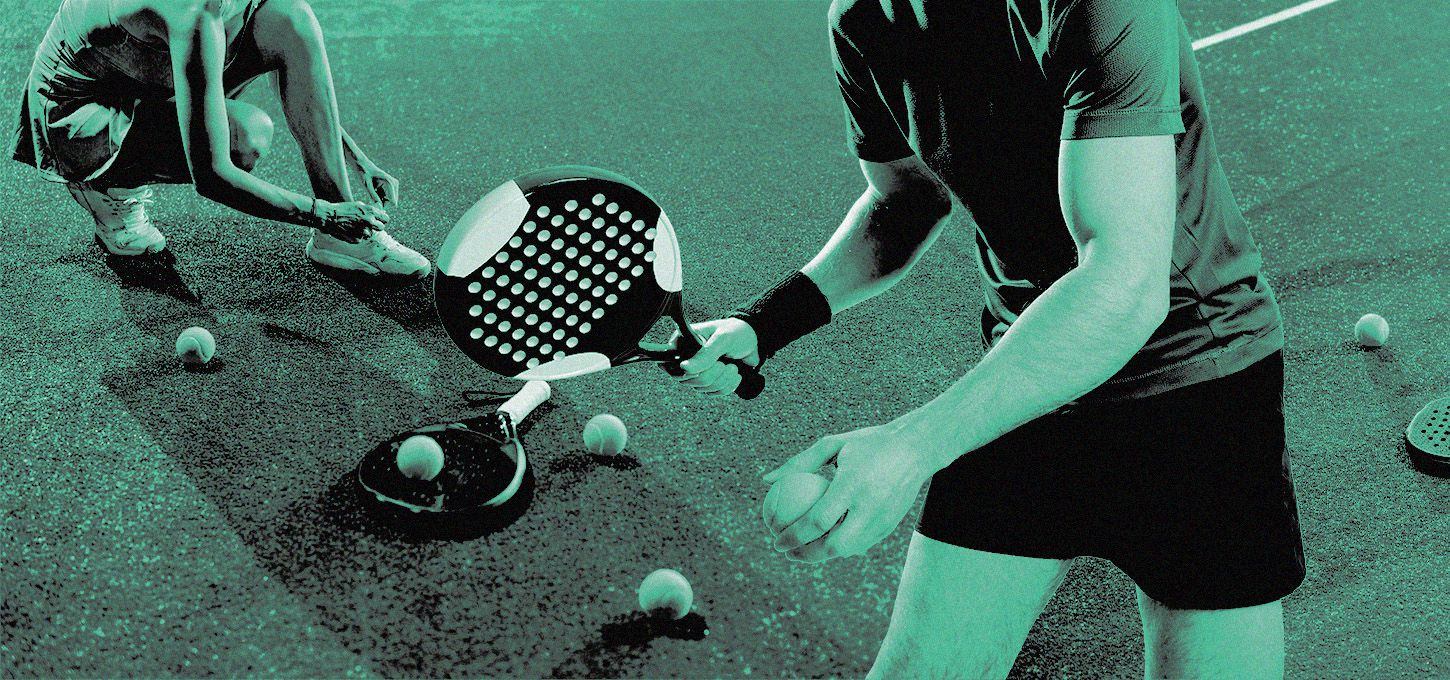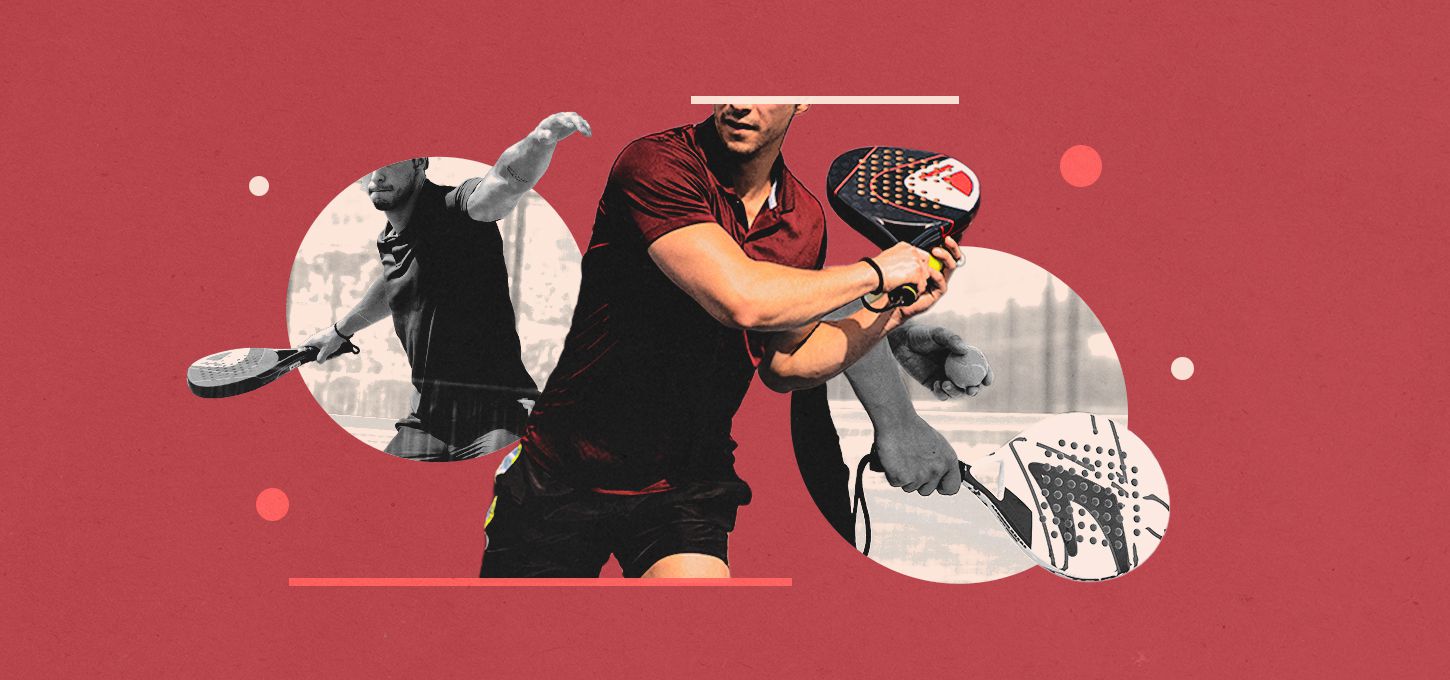
Tennis and padel are both popular racket sports and we are taking a look at what differentiates them such as equipment, court structure, and gameplay.
Padel is generally considered easier to learn, highly social, and less physically demanding than tennis, which relies more on raw power and endurance.
Scoring System
The scoring system in padel and tennis are nearly identical (15, 30, 40, game), requiring a two-point margin to win.
Both make use of set structures requiring a six-game win, with a two-game advantage, or a tie-break at 6-6.
The main difference is that a lot of professional padel tournaments use a 'golden point' at deuce, unlike traditional tennis advantage rules.
Ball
When you first see the different balls, they appear almost identical, but look closer and you will be able to spot some key differences.
Padel balls are designed for control on smaller courts, featuring lower internal pressure (10-11 psi) and a slightly smaller diameter (6.35-6.77 cm), meaning they wont bounce as high or travel as fast.
On the other hand, tennis balls have a higher pressure (14 psi) and are slightly bigger (6.54 - 6.86 cm), as they are designed for speed and distance across a much larger space.
Although the differences may seem small, switching between the two balls will drastically change the flow and tempo of the game, so it is advised to stick to each sport's specific ball.
Court
One clear difference between the two sports, and probably what separates them the most, is the court.
A standard padel court, designed for doubles, measures in at 20m by 10m and is surrounded by walls made of glass and metal mesh.
These walls are an important part of the game as they are used for rebounds to keep the ball in play, adding an extra layer of skill and strategy.
In comparison, a tennis court designed for doubles measures in at 23.77m by 10.97m , meaning it is about a third larger than a padel court.
The tennis court has open boundaries with no walls, the larger open space results forces player to do more running, have faster reactions, and complete bigger shots.
More information on the Different Types of Shots in Padel
Shoes
Although it is the common assumption that any court shoe will do, there are a few subtle difference between a tennis shoe and a padel shoe that will make a noticeable difference.
Padel shoes are designed for grip on sand-covered courts and artificial turf, allowing for controlled sliding and rapid changes of direction.
Tennis shoes vary more depending on the court type, however, they are typically designed for greater impact protection and aggressive-push offs due to the longer strides taken in the sport.
While any court shoe is a good starting point, wearing the right shoe for your sport are recommended to not only improve performance but also help to prevent injuries.
Racket
Another obvious difference between the two sprots are the rackets.
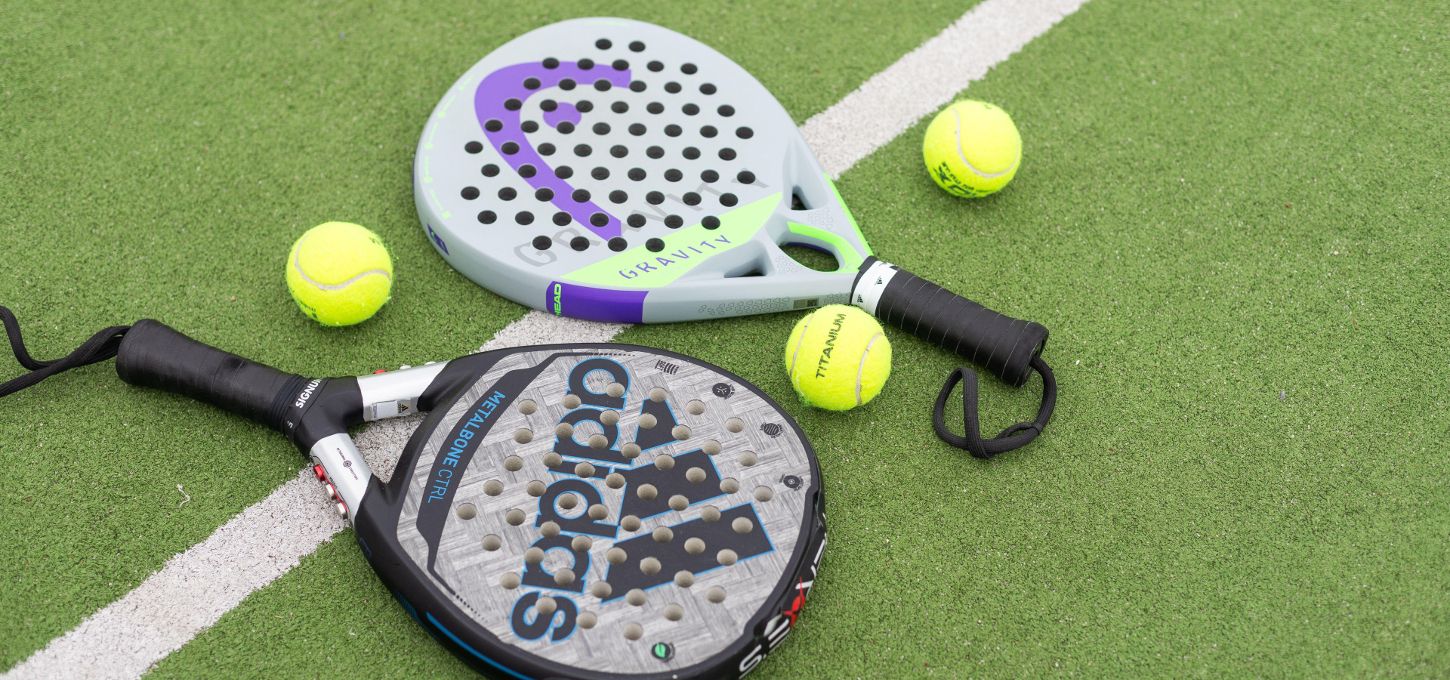
A padel racket is solid, shorter (max 45.5cm), and perforated with holes.
It is designed for control, maneuverability, and quick reflexes while offering a forgiving sweet spot.
Padel rackets also come in three main shapes:
Round | Best for control and ideal beginners learning the sport |
Teardrop | Balanced with a nice mixture of control and power |
Diamond | Best for power, advised for advanced players looking to step up their game |
On the other hand, a tennis racket is longer, lighter, and strung to help generate power, spin, and precision on larger courts.
In tennis, the power comes from the 'trampoline effect' of the strings, whereas in padel the power comes from the stiffness in the foam.
Summary of Differences
Feature | Padel | Tennis |
Court Size | Singles: 20 x 6 m | Singles: 23.77 x 8.23 m |
Playing Area | Enclosed court with glass and metal mesh walls | Open court with no surrounding walls |
Racket | Shorter racket with a solid, perforated head | Strung racket with a long handle and larger head |
Ball | Lower pressure, slightly smaller | Standard size, higher pressure |
Players | Almost exclusively doubles | Singles or doubles |
Serve | Must be underhand | Usually overhand |
Game Duration | Approximately 60 minutes | Approximately 90 minutes |
Gameplay Style | Strategic, control-focused, quick reflexes | Power-driven, endurance-focused |
Learning Curve | Easier to learn | Higher technical difficulty |
Here is everything you need to know about The Rise of Padel