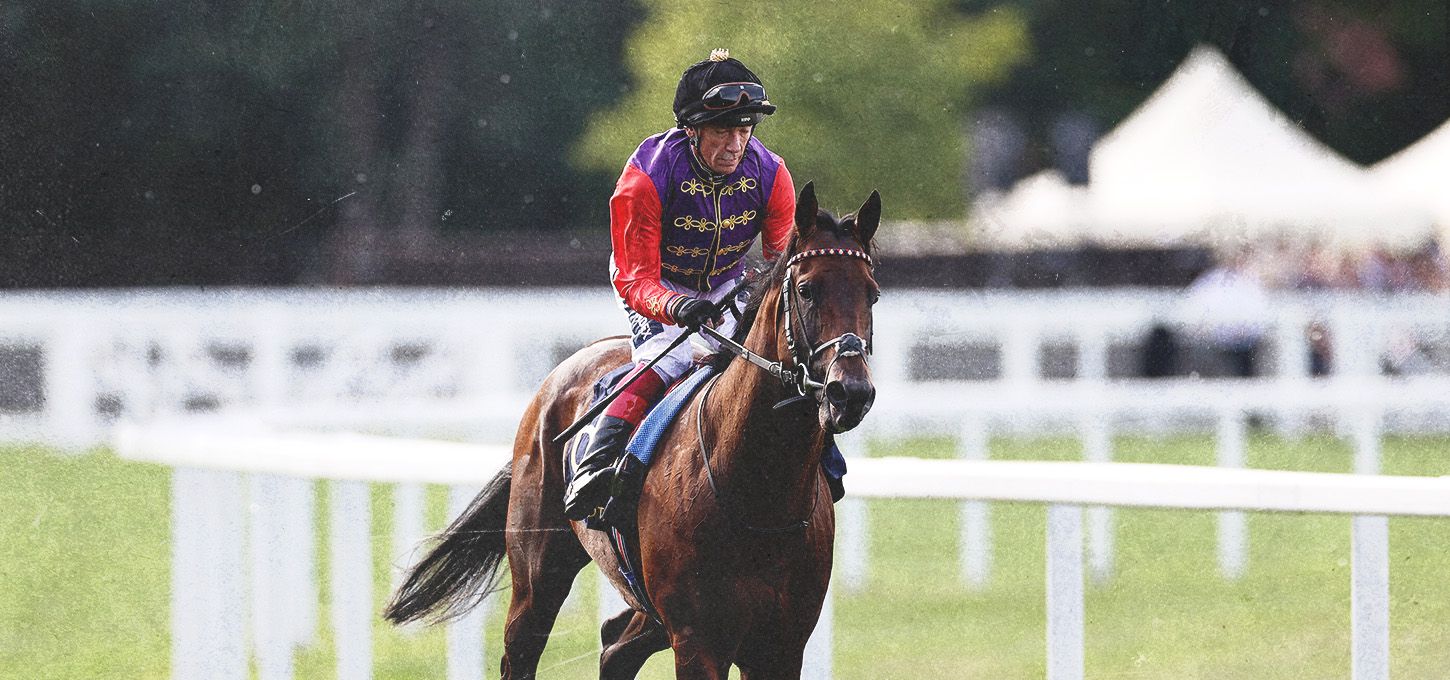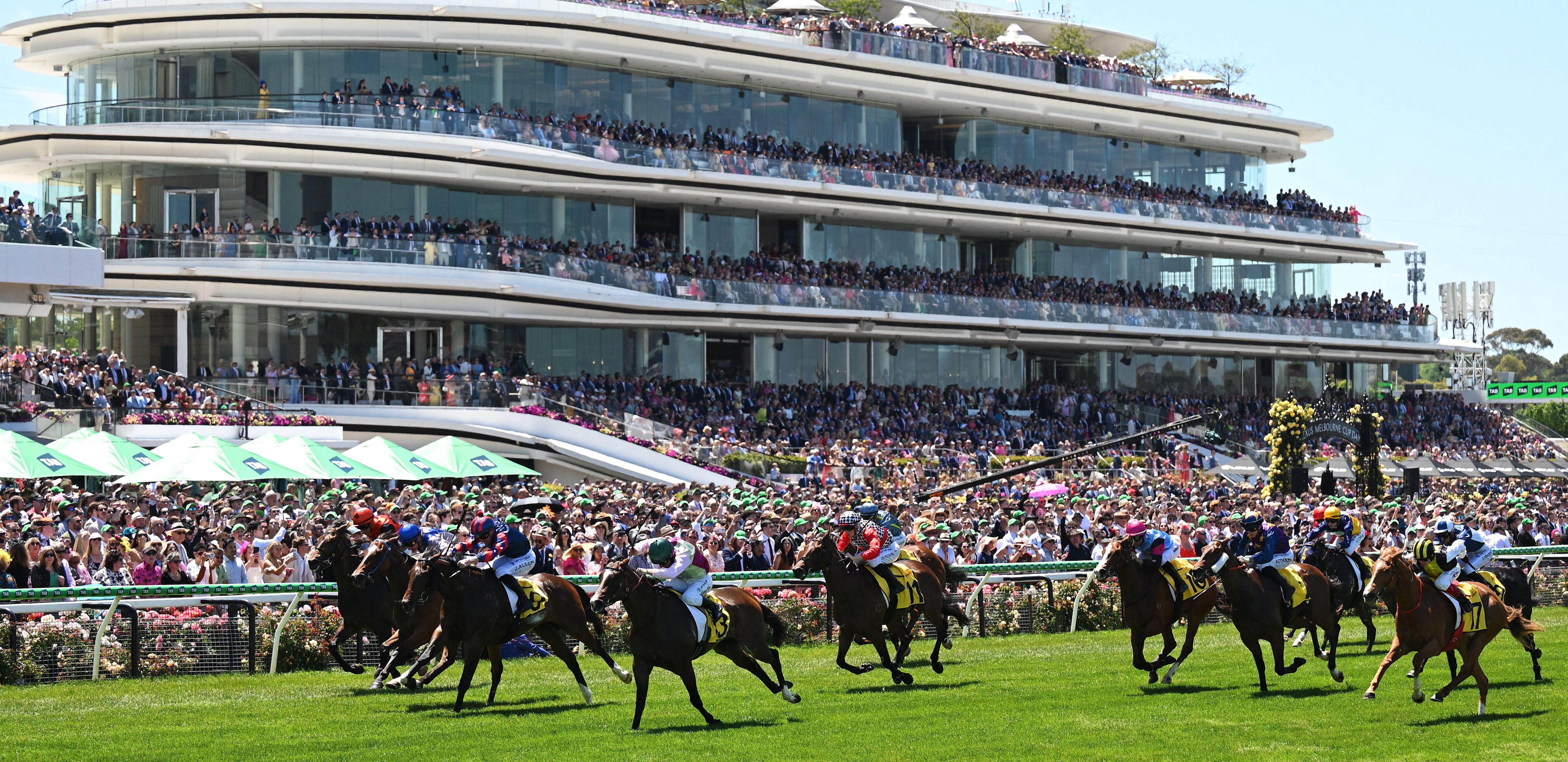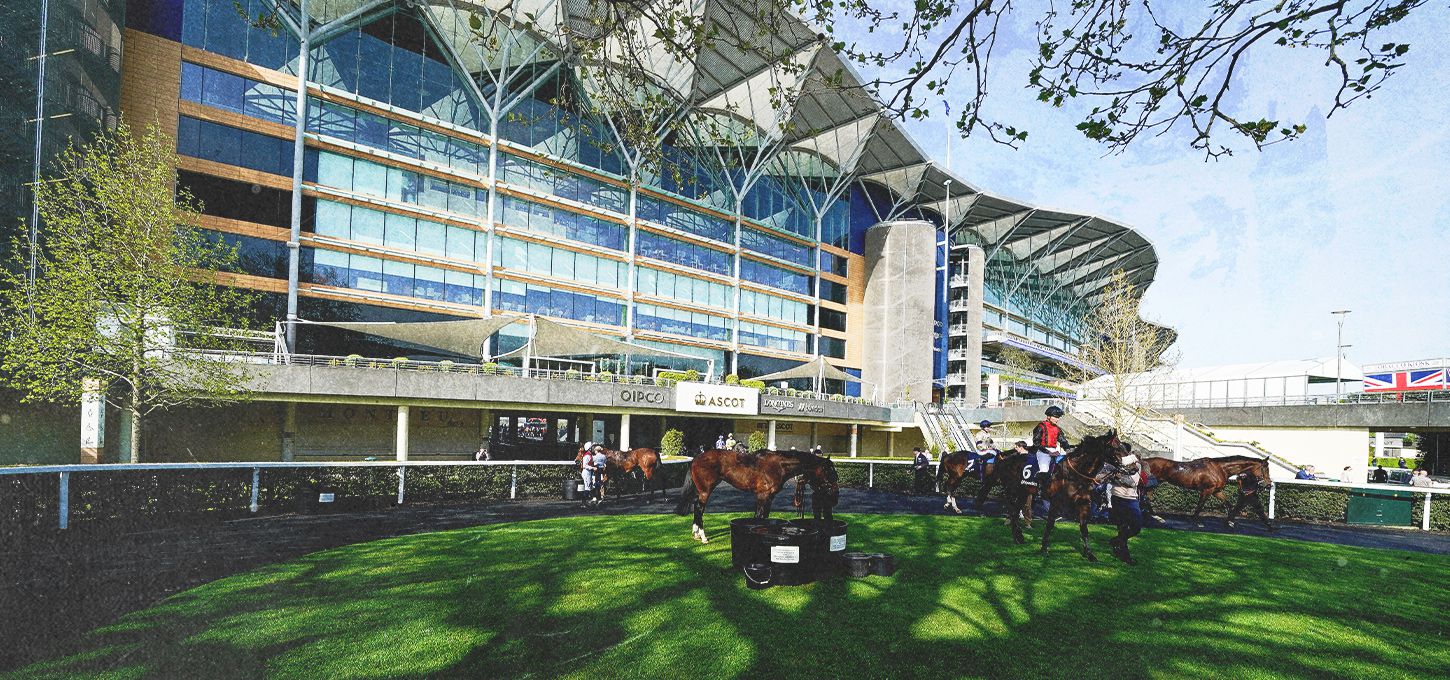
Royal Ascot is the crown jewel of the flat racing calendar and it offers five days of top-level racing, fashion, food & drink and pageantry.
Here is a guide to the Berkshire racecourse.
Ascot Racecourse Location
Where is Ascot?
Ascot is a town in Berkshire, England, located in the Royal Borough of Windsor and Maidenhead.
It lies less than 10km south of Windsor and is 40km west of London.
How to get to Ascot Racecourse?
By Train
South Western Railway runs services to Ascot from Reading, Aldershot and London Waterloo.
The station is a seven-minute walk from the racecourse.
By Bus
There are several bus routes that serve the area surrounding Ascot, these are the Green Line 702, Green Line 703, Green Line 704 and Green Line 705.
These buses connect to various locations, including Heathrow Airport, Windsor, and Camberley.
By Car
From London & The North, travel on the M4 before taking Junction 6 onto the A332 Windsor by-pass and follow the signs to Ascot.
From the West, take Junction 10 off the M4 to the A329(M) signed to Bracknell and follow the signs to Ascot.
From the South & East, take Junction 3 off the M3 onto the A332 signed to Bracknell and follow the signs to Ascot.
From the Midlands, head southbound on the M40 and come off at Junction 4. From here, take the A404 towards the M4 (Junction 8/9). On the M4 head towards Heathrow/London before leaving at Junction 6. Then follow the A332 Windsor by-pass to Ascot.
Ascot Racecourse Layout
Track Layout
The flat course at Ascot has both a straight and round course. There is a straight mile course, which stages races from five furlongs up to a mile, and the round course, with races run over one mile and up to the extreme two-mile-and-four-furlong trip of the Ascot Gold Cup.
The round course is a right-handed track, with a downhill run into Swinley Bottom and relatively short run-in from the final turn. Given the fairly short home straight and sweeping last bend, it can suit prominent racers.
The straight course is a pretty fair test and often the pace of the race is key to a horse's chance. Generally speaking those drawn high have held a slight advantage in fields of 14 or more over the five or six furlong trips.
For National Hunt racing the right-handed course is galloping in nature. This course reopened in 2006/07 after major redevelopment work, and improved drainage means conditions rarely get as testing as in days gone by.
The chase course often favours those ridden prominently and the fences are considered a stern test of jumping.
Enclosures and Viewing Areas
The list of enclosures and viewing areas at Ascot Racecourse are as follows:
The Royal Enclosure
The Queen Anne Enclosure
The Windsor Enclosure
The Village Enclosure
Key Races at Ascot
The Ascot Gold Cup
Run on Thursday at Royal Ascot, the Ascot Gold Cup is contested over two and a half miles and is the premier long-distance race of the flat racing season.
The Aidan O'Brien-trained Kyprios won the race in 2024 for the second time, adding to the 2022 success, with Ryan Moore aboard for both victories.
The Queen Anne Stakes
Royal Ascot's traditional curtain-raiser is the Group 1 Queen Anne Stakes set over one mile.
Saeed bin Suroor is the leading trainer in the race with eight victories, the most recent of those coming back in 2007 with Ramonti.
The Prince of Wales's Stakes
The feature race on Wednesday at Royal Ascot, The Prince of Wales’s Stakes is run over a mile and a quarter and is a Group 1.
It is often seen as the championship race of the campaign for middle-distance horses.
The deadly duo of Aidan O'Brien and Ryan Moore combined to win the 2024 race with Auguste Rodin.
The St James's Palace Stakes
A one-mile contest for three-year-old colts that takes place on the opening day of Royal Ascot, this Group 1 attracts a stellar field.
Trainer Aidan O'Brien won this for a record-extending ninth time in 2023 with Paddington, while Rosallion claimed the spoils a year later for Richard Hannon Jr..
The Commonwealth Cup
Introduced in 2015 as a schedule shakeup for European sprinters, this Group 1 over 6f is open to three-year-old colts and fillies and takes place on Friday of Royal Ascot.
Tom Eaves won aboard Inisherin for trainer Kevin Ryan in 2024.
Queen Elizabeth II Jubilee Stakes
Rebranded as the Queen Elizabeth II Jubilee Stakes in 2023, this Group 1 over 6f was restricted to horses aged four and above when the Commonwealth Cup was created a decade ago.
Among the winners of this race is the legendary Lester Piggot, who claimed the spoils no less than 10 times from 1958 to 1993.
Ascot Racecourse History
Ascot Racecourse Opening Date
Racing has been taking place at Ascot for over 300 years and the racecourse was founded in 1711 by Queen Anne, when out riding from Windsor Castle.
When was the first Royal Ascot meeting?
The first four-day meeting was held in 1768, but the five-day Royal meeting it is known as today started to take shape with The Gold Cup's introduction in 1807.
Has Royal Ascot been held at a different course?
When the racecourse was being redeveloped in 2005, the Royal Meeting was staged at York Racecourse.