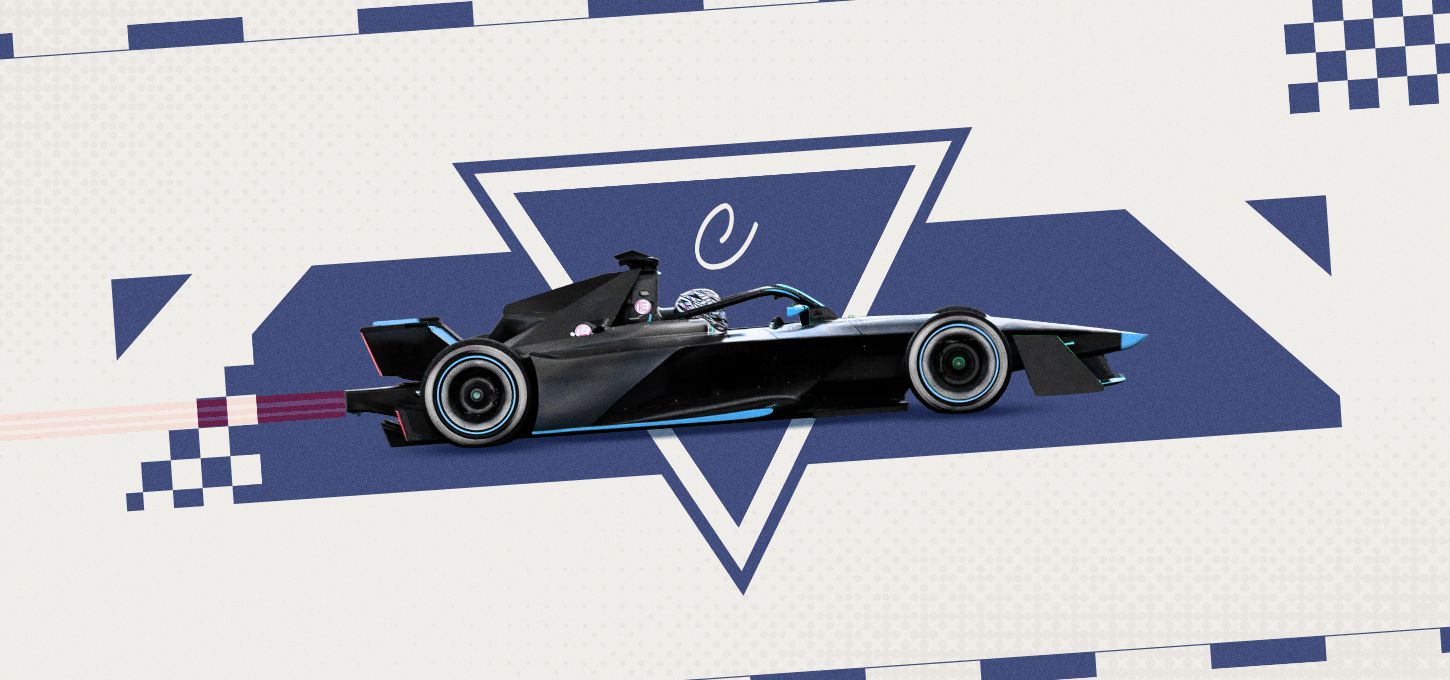
The 2025/26 Formula E World Championship will be the 12th season of the series for fully electric cars.
It will be the final season using the Gen3 Evo cars introduced for the 2023/23 campaign.
Britain's Oliver Rowland won the 2024/25 championship in his seventh full season in the series, driving for the Nissan team.
Formula E season dates
The 12th Formula E season kicked off once again in Sao Paulo in December.
There are 18 races including six venues hosting a double-header, making 12 cities visited, with one host city still to be confirmed at time of writing.
The season ends as usual with one of those double-headers at London's ExCeL on August 15th and 16th.
Formula E driver line-up
Here's how the 2025/26 season driver line-ups shape up.
Team | Drivers |
Porsche | Pascal Wehrlein & Nico Muller |
Maserati | Stoffel Vandoorne & Jake Hughes |
Cupra Kiro | Josep Maria Marti & Dan Ticktum |
Envision Racing | Joel Eriksson & Sebastien Buemi |
Citroen Racing | Jean-Eric Vergne & Nick Cassidy |
DS Penske | Maximilian Gunther & Taylor Barnard |
Jaguar Racing | Mitch Evans & Antonio Felix da Costa |
Lola Yamaha ABT | Lucas di Grassi & Zane Maloney |
Nissan | Norman Nato & Oliver Rowland |
Mahindra Racing | Nyck de Vries & Edoardo Mortara |
Andretti | Jake Dennis & Felipe Drugovich |
Formula E race weekend format
Formula E weekends take place over two days, or three days in the case of double-headers. Typically there are two 30-minute practice sessions with one on Friday afternoon and one on Saturday morning, although both are held on the Saturday in Monaco.
On double-header weekends, a third practice session takes place on the Sunday morning.
Qualifying typically takes place on Saturday afternoon and last for one hour. Drivers in odd-numbered championship positions form Group A and those in even-numbered positions form Group B. Each group gets ten minutes to set their fastest lap time, with the top four from each group advancing to the duels stage.
Here they are paired off and compete to set the fastest lap in quarter-finals, semi-finals and a final to determine grid positions.
The race follows on Saturday evenings, while on double-header weekends there is a separate practice, qualifying and race on the Sunday.
Formula E scoring system explained
Points are awarded to the top 10 finishers in each race with 25 to the winner, 18 to the second and then 15-12-10-8-6-4-2-1 down to 10th. This has become the standard points system for FIA sanctioned championships such as Formula 1.
An additional three points are awarded to the driver who wins pole position, while the fastest lap in the race earns an extra point.
Formula E history
Formula E was conceived in 2011 by Jean Todt, the former Ferrari team principal and president of the FIA, world motorsport's governing body.
The idea was for a championship that would see single-seater electric cars racing on circuits set up on the streets of major cities around the world.
The inaugural season of 11 races began in Beijing in September 2014 and Nelson Piquet Jr ended up taking the title by a single point ahead of Sebastien Buemi, with fellow former F1 drivers Lucas di Grassi and Jerome d'Ambrosio third and fourth.
Jean-Eric Vergne, who won the title in 2017/18 and 2018/19, is the only two-time champion, meaning there have been ten different championship winners.
French outfit Renault e.dams claimed the first three teams' titles and are the most successful ahead of DS Techeetah and Mercedes, who have each won two championships.
Are Formula E cars electric?
Formula E cars are fully electric with the current generation car using a separate power train for the front and rear wheels.
The batteries are designed to last an entire race distance of about 45 minutes, with the drivers able to regulate how much power they are using so that they can deliver the maximum energy when they need it, while also ensuring that they make it to the end.
A perfectly managed race will see the car drain the last of its usable energy shortly after crossing the finish line.
Power is regenerated during the race when the driver brakes, similar to a dynamo powering the light on a pushbike.
The batteries are recharged after each race and must last the full season. They can only be replaced if they are damaged.
The first generation car did not have a battery capable of lasting the whole race, so drivers had to pit to change cars midway through. That ended when the second generation car was introduced for the 2018/19 season, with battery capacity increased from 28kWh to 52kWh.
All teams use the same car, which is built by Spark Racing Technology, while Williams Advanced Engineering supplies the batteries.