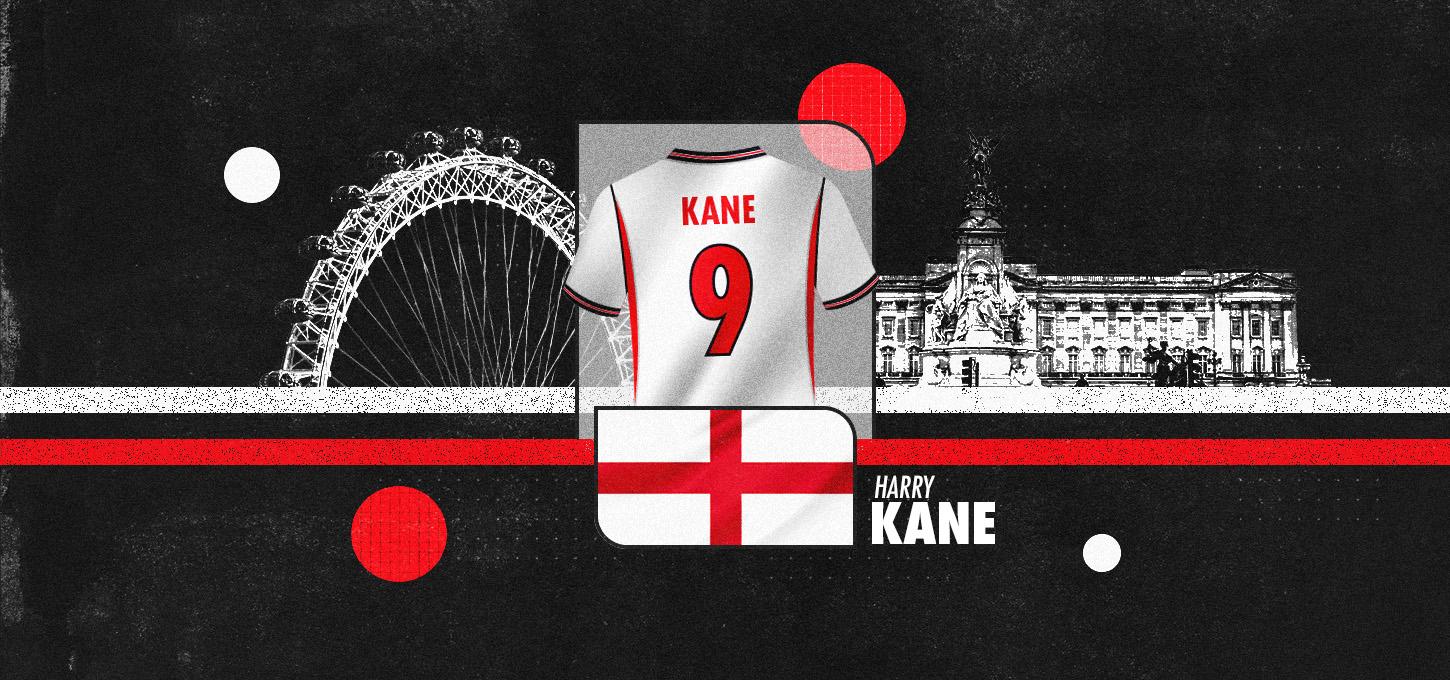
Sir Stanley Matthews. Sir Bobby Charlton. Kevin Keegan. Michael Owen. Harry Kane.
It's been a quarter of a century in the making, but at long last, another Englishman has won the Ballon d’Or.
Since 2001 when Owen inscribed his name onto the illustrious list of countrymen to claim world football’s most coveted individual prize, England’s vast production line has flirted with the idea of sitting on the Ballon d’Or throne, only to fall agonisingly short in their quest for immortality.
2005 witnessed Steven Gerrard rank third and Frank Lampard finish runner-up to Barcelona and Brazil sensation Ronaldinho.
Wayne Rooney’s best Ballon d’Or ranking arrived in 2011 when the Manchester United forward was voted fifth as Lionel Messi basked in the coronation of being named world’s best player for a third year in succession.
In recent history, Jude Bellingham was the closest an Englishman has been to getting their hands on the esteemed Ballon d’Or prize, ranking third in 2024 following a tremendous debut campaign with Real Madrid.
Somewhat remarkably, despite the years of consistent goalscoring which have established him as one of the most recognisable and prolific strikers in world football, Kane had never finished higher than 10th in the Ballon d’Or rankings.
Repeatedly overlooked before, Kane embarked on a goal-laden path that only the absurd Messi had trodden before him. Producing a campaign of astonishing individual excellence, the 33-year-old ensured it was inconceivable for the voting powers to neglect him once more.
Make no mistake about it, Kane was the best player in the world across the last year.
Registering 73 goals for club and country, Kane’s astounding prolificacy was the cornerstone of his Ballon d’Or triumph.
But you only have to sample 90 minutes of the Bayern Munich talisman and England captain on a Saturday afternoon in the Bundesliga to acknowledge he offers a heck of a lot more than just goals.

Taking his game to a new level in Munich
Kane’s journey from flattering to deceive in the Football League to Ballon d'Or victor makes you even more appreciative of a world-class figure who has terrorised goalkeepers and defenders in England, Germany and across the continent for the last decade.
Very few anticipated the legacy Kane would go on to create during forgettable loan spells at Norwich City, Leicester City, Leyton Orient and Millwall.
There were clues of his future potency, but not enough to suggest Tottenham supporters were witnessing the embryonic stages of England’s record goalscorer - and a Ballon d'Or winner.
The last Englishman to win the Ballon d’Or, Owen, by contrast had won the Premier League Golden Boot twice by the age Kane made his first-team breakthrough under Tim Sherwood at Spurs.
In the subsequent campaign, Kane announced himself to the Premier League under Mauricio Pochettino with 21 goals and a Young Player of the Year award. The countless hours dedicated to extra sessions on the training ground and conditioning his body paid dividends as he finally showcased his uncovered forte: scoring goals.
Professionalism and wellbeing have been crucial for Kane in the years that have followed. Quality and numbers are one thing, but the striker flaunts durability by the bucket loads. Since the start of the 2020/21 season, he’s missed a total of 16 matches for club and country – four of which were due to a rare injury in 2024/25.
Despite all the individual accolades Kane achieved whilst at Tottenham, it’s with Bayern where England's joint most-capped male player has unshackled himself from the trophyless tag which threatened to blemish his reputation.
A player of Alan Shearer’s calibre should have won more during his delightful career, and yet Kane could have won even less.
Yes, the Bundesliga tends to be a walk in the park for Bayern. Some pundits went as far to suggest Kane lifting the Meisterschale “doesn’t count”. The Bavarian giants are perennial champions of the German league, winning 13 of the previous 14 editions; it was somewhat poetic then that Kane’s first season in Munich was the one year Bayern were dethroned by Bayer Leverkusen’s unprecedented unbeaten season.
Despite ending his maiden season at the club with 36 Bundesliga goals and the European Golden Shoe, Kane was slandered in the German press for his team’s failings. In a career set on resilience, missing out on silverware during his first campaign only added fuel to his fire.
The sequel season wasn’t too bad either from a personal perspective with 26 goals and a hatful of assists, but winning the Bundesliga lifted a weight off Kane’s shoulders.
Unburdened, Kane honed on his craft in the 2025/26 season. 61 goals in 51 appearances is quite frankly obscene, but the technique exhibited and the variety of his goals have cemented his status as a master marksman.
More than just a striker
Kane’s prolificness steals the headlines, but his repertoire is not limited to finding the back of the net.
The striker’s skillset has broadened as his career has progressed and he’s redefining the expectations of a modern number nine.
Do you want your striker to loiter on the shoulder of the last defender and have limited input on proceedings? That’s not very Kane-like. Instead, the Bayern forward will drop deep to collect a pass, swivel on the half-turn and spray a 50-yard pass out wide for his winger to pursue.
Merging his impeccable vision and passing range, Kane’s untraceable movement has helped him to evolve into a multi-faceted threat. He is given the freedom by Vincent Kompany and Thomas Tuchel to roam as he desires, and yet while he is collecting passes on the edge of his own 18-yard box, it’s not stopped him from galloping to the other end of the penalty area to get on the end of a cross.
He is both the fulcrum and the finisher, integral to how both Bayern and England build-up and execute.
Obliterating all records before him
Only Messi’s staggering 82 goals for Barcelona and Argentina in 2011/12 can better Kane’s return of 73 for Bayern and England.
The previous campaign was freakish even by Kane’s impeccable standards, but the former Tottenham ace has been a beacon of consistency since landing in Germany.
158 goals in 156 matches for Bayern Munich means he’s already sixth on their all-time goalscorers list after three seasons.
In the Bundesliga, he averages 1.05 goals per game, dwarfing the returns of fellow Bayern legends Gerd Muller (0.86) and Robert Lewandowski (0.81).
Kane reached the landmark figure of 100 Bundesliga goals in September and achieved the feat in just 98 matches, obliterating the previous record, which was set by FC Köln's Dieter Müller in 1977, who required 129 appearances to achieve a century of goals in Germany's top-flight.
Since Kane’s arrival in Munich, the Torjägerkanone (Bundesliga Golden Boot) has been a formality. Last season, his return of 36 goals was nearly double of his closest competitor, VfB Stuttgart’s Denis Undav.
Add in his playmaking abilities and last term, Kane averaged 1.32 goals contributions per appearance.
Only Real Madrid’s Kylian Mbappe scored more in the 2025/26 UEFA Champions League, but while the Frenchman ousted him on that occasion, Kane did at least surpass Messi for most goals in Europe’s elite club competition since turning 30.
Whilst at the World Cup, Kane’s six goals ensured he became England’s leading goalscorer at major tournaments. A century of goals for his country feels inevitable as his total now stands at 91.
The only shame is that Kane’s prolificacy did not translate to World Cup glory or UEFA Champions League success.
However, with the Ballon d'Or now under his belt and his place amongst the pantheon of footballing greats cemented, Kane's desire for major honours will burn brighter than ever.
And who knows, if Kane can lead Bayern to continental supremacy or England to a Euros triumph, the striker may even be tempted to return to England in pursuit of Shearer's Premier League goal record.