Football journalist and author Guillem Balagué discusses how Unai Emery has stayed calm under increasing scrutiny to lead Aston Villa to the Europa League final.
There was a moment, in the final game of last season against Manchester United, when Unai Emery was already thinking about next August. About the first team meeting of the new campaign and what he was going to say.
Seven clubs had bigger budgets than Aston Villa. That was going to be the message. It was not a lament, just a target.
But before any of that could land, Villa had to get through the summer — and the summer was ugly. Five games into the new season and the flatness was everywhere, on the terraces yes, but also on the training pitch.
The shadow of the UEFA Champions League that got away hung over everything. The transfer window had not delivered what people had hoped for. The club felt deflated, and the noise around it grew accordingly.
Except in one place.
Emery has a phrase he comes back to constantly, a kind of operating principle: always think you can learn, always think you can improve, always think you know the way. It sounds simple but when everyone around you has doubt, it is not easy to go back to it. And yet in that early-season period, when the word “crisis” started circulating in the media, Emery shut it out entirely.
He told me so himself. I pointed to the noise around the club, the coverage framing it as a problem. He was having none of it and even more, he didn’t want any of that in his head. He couldn’t afford it and, decisively, wouldn’t allow it. The work was the answer, and the work required focus, and focus required that you refuse to entertain the panic. That’s as much a coaching method as anything that happens on the training pitch.
Then came the run of victories that shifted momentum, and totally changed the season’s story. It reminded people what this group — and this manager — were capable of. And for a while, the doubters were quiet.
But football doesn’t let you stay comfortable for long. The defeat to Tottenham Hotspur, just before the second leg of the Europa League semi-final against Nottingham Forest, brought a second wave of noise.
And this time it surprised even me — the sheer volume of people ready to pull the thread and unravel the whole thing because of one result.
It’s worth pausing on this, because it reveals something important about how football is consumed versus how it’s actually managed. When you know Emery’s history — and there’s enough out there now, in articles, books, interviews — one thing becomes clear: the league game before a European semi-final tends not to be where his full attention lies.
Europe has always been where Emery builds his legacy. It’s where he earns prestige, better contracts, access to bigger clubs. He has always respected it above everything, especially when the squad has not been reinforced as much as it was needed for one reason or another.
This is what I’d call the two-motorway theory of football. One motorway carries the fans — what they feel is absolutely real, even when it isn’t literally true. The other carries the decision-makers, who know the facts and act on them. Both motorways are necessary. Both make the game what it is.
There’s no point condemning supporters for reacting — that’s what supporters do, and emotion is part of what makes football worth anything. But with the volume of information now available on how Emery operates, it would be a missed opportunity not to educate yourself, even a little. The reaction can still be extreme when things go wrong. But underneath it, you’ll know the club is in serious hands.
Those hands were built over a long time, and with a lot of scar tissue.
Emery arrived at Villa in November 2022 with the club 17th in the Premier League, one point above the drop. His first address to the squad began with accountability. Steven Gerrard’s sacking, he told the players, was not Gerrard’s fault alone. They shared responsibility. All of them. The club shared it. And then: “I didn’t come here to waste my time. I’ve come here to win things.”
The work that followed was unlike anything most of those players had encountered. Coaches would be in Bodymoor Heath from eight in the morning until eight at night. Hour-and-a-half tactical sessions three times a week. What separated those who thrived from those who didn’t was a simple filter: if you couldn’t handle it, you weren’t there. Emery doesn’t explain that rule, he just applies it.
Senior players — Emi Martinez, Ollie Watkins, John McGinn — embraced the demands and the enthusiasm spread. The language in the canteen changed. “We’ve gone from black and white football to full colour,” someone said. It captured something that was hard to put into statistics. Although the statistics help too. They qualified for Europe every season. And now we press forward to this campaign.
Damià Vidagany, Emery’s right-hand man since before Villa and one of the key architects of this project, put it plainly on X: “Injuries, no penalty for us in one year, biggest investment in history for the bigger budget clubs, playing Thursday-Sunday 2pm… well, CHAMPIONS LEAGUE!!! No excuses culture, a great group of committed players and the best manager — yes EPL, the best manager.”
On Instagram @AdamtheCCO offered a different kind of context: Villa have qualified for the Champions League with a net spend of £28m and still have a European final to play. Arsenal’s net spend this season: £250m. Liverpool’s: £235m. Manchester United’s: £167m. Spurs: £150m. Manchester City: £135m. Sunderland, newly promoted, spent £120m. Burnley, Leeds, Fulham — all spent more than Villa. “And Unai Emery hasn’t even been nominated for Manager of the Year. Hilarious.”
He’s right. It absolutely is hilarious.
There’s a historical footnote that Adam added. Spurs finished 17th the season they won the Europa League. Manchester United were 16th when they reached the final. West Ham were 14th when they won the Conference League. European runs drain Premier League clubs — everyone in the game knows this, even if the reaction in the stands rarely accounts for it.
None of that will be lost on Emery. He will arrive in Istanbul having won 23 consecutive Europa League ties: the last time he lost one was with Valencia in 2012. That number tells you something no tactical breakdown fully can. It tells you about nerve, preparation, about the kind of mental position that sees room for improvement where others see catastrophe, and sees a target where others see a ceiling.
Seven clubs with bigger budgets. That was the message he prepared in the summer.
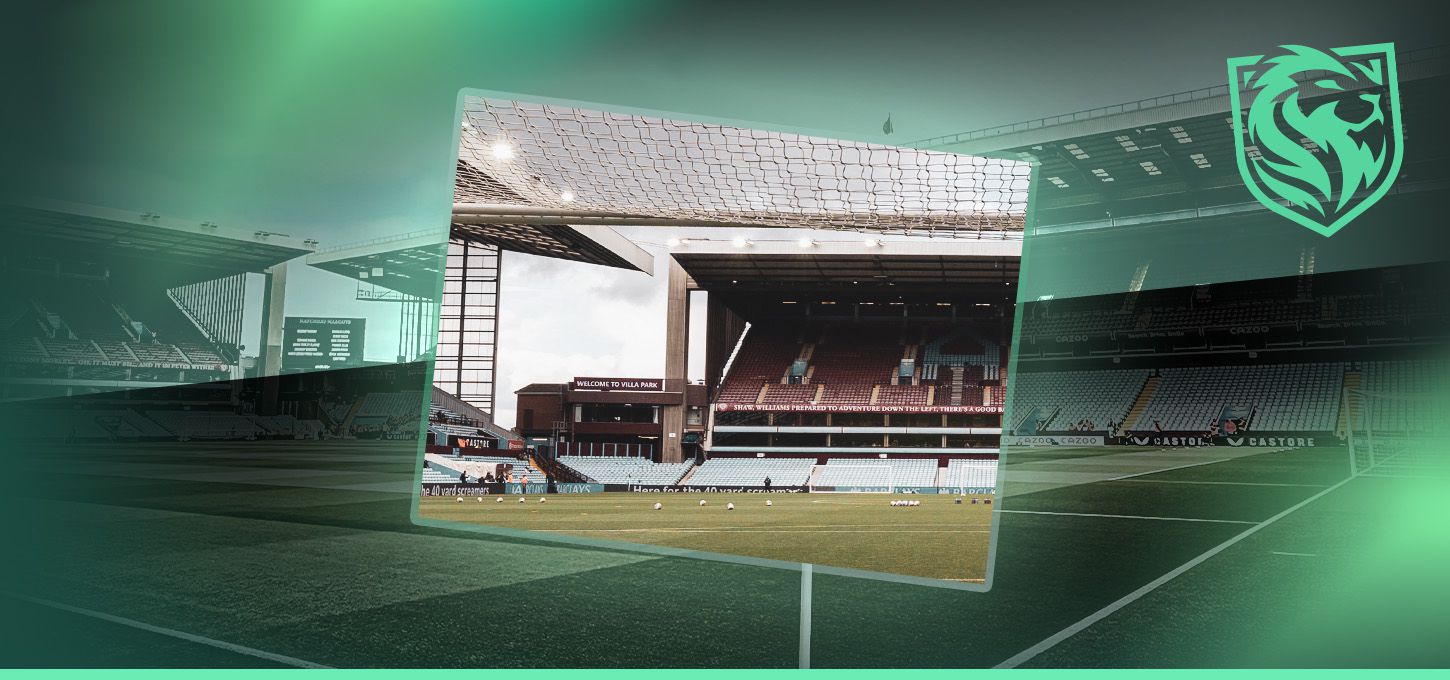
Well, see you in Istanbul and in UEFA Champions League stadia all over Europe. Including Villa Park.