Most sports will use terminology that is baffling to beginners, but perhaps none more so than cricket.
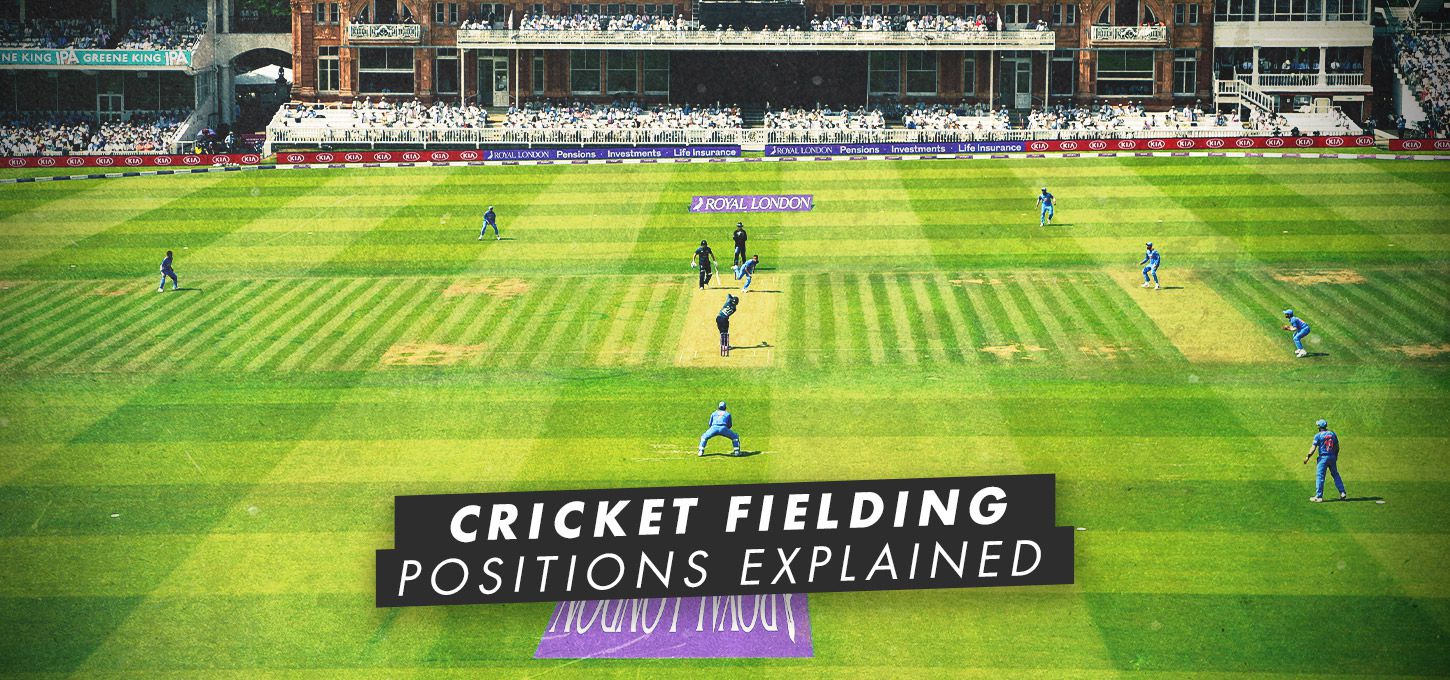
While positions on a football pitch are largely self-explanatory, cricket’s equivalent are somewhat less obvious, even to more experienced watchers.
Many positions can have prefixes such as ‘deep’ or ‘backward’, which as the name suggests, means they’re deeper, or further behind the batter than the standard position, for example ‘deep backward point’ would stand further behind the batter and nearer the boundary than point.
Similarly, positions can be the same on the leg (or on) side and the off side. For example, mid-on operates in the same place, but opposite side, as mid-off.
Fields are set depending on a team's tactics throughout a match. If a team are looking to dismiss a batter who is playing defensively, they may surround him with catching fielders. If a batting team need to score a high volume of runs, they may look to the boundary, with the fielding team placing more fielders deep to prevent fours and sixes.
From silly point to cow corner, we’ve got you covered.
Fielding positions
Wicket-keeper
Starting with the best-known fielding position, the wicket-keeper positions themselves behind the batter’s stumps, catching the majority of balls that are either left by the batter, or edged, looking to catch the batter.
They’ll also stand near to the stumps when a spinner is bowling, not just looking to take catches, but stump a batter charging down the pitch.
Backstop
An infrequently used position, especially in the professional game. The backstop would stand behind the wicket-keeper but on the boundary, there to save any potential fours from being scored.
Slip
Positioning themselves next to the wicket-keeper, it’s common in Test cricket to see anywhere between two and four slips, looking to catch any balls edged behind by a batter.
Slips are considered specialist fielding positions, requiring excellent reflexes, catching and high levels of concentration.
More slips can leave more space to score runs down the ground, encouraging batters to play shots to score runs, but leaving themselves open to be caught behind.
Leg slip
More commonly deployed with a spin bowler, the leg slip is positioned near to the batter, but on the left side, aiming to prevent any sweep shots.
Fine leg
A fairly self-explanatory position fine leg operates fine on the leg side, looking to stop runs when a batter plays a glancing shot down the leg side but wide of the wicket-keeper.
Gully
Operating wide of the slips, the gully will stand just behind square of the batter, and like the slips, needs good reflexes and catching.
Leg gully
Exactly the same as gully but on the batter's leg side.
Third man
Mirroring fine leg but on the batter's offside, imagine third man sitting in the gap between slip and gully but on the boundary.
Point
Operating square but on the off side of the batter, the fielder in point will typically stand a little squarer and deeper than gully, and requires good athleticism.
Cover
A busy fielding position, many bowlers will pick a line to try and draw players into playing a drive towards the covers, i.e. playing a cover drive, in the hope of catching an outside edge to the wicket-keeper or slips. As such, the cover fielder, operating forward of point, is a crucial run preventer.
Extra cover
Similar to cover, but straighter to the batter.
Mid-off
Straighter still, mid-off or mid-on will typically operate closest to the bowler, and is there to prevent drives down the ground.
Mid-on
The same as mid-off, but on the batter’s leg side
Long-off
Similar to mid-off, but positioned on the boundary. Straight down the ground is a common target for batters, particularly off spinners, making it a common catching position.
Long-on, the same as long-off, but on the batter’s leg side.
Midwicket
Similar to cover but on the batter’s leg side, batters will often try to play towards midwicket for any balls down the leg side that can’t be pulled.
Square leg
Similar to point, but on the batter’s leg side, square leg stands square to the batter and looks to catch any pull shots from short balls.
Silly point
Similar to point, but standing dangerously close to the batter, hence the name. Silly point is exclusively a catching position, standing in line with point, but just a few feet from the batter.
Typically deployed for spin bowlers, silly point aims to catch any mistimed defensive shots that pop into the air, while cutting off scoring options for batters through the offside.
Silly mid-off
Similar to silly point, but positioned further down the wicket, in line with mid-off.
Most commonly used towards the end of an innings in an ultra-aggressive field setup with the fielding team desperately chasing a wicket.
Short leg
The same as silly point, but on the batter’s leg side.
Cow corner
A lesser used field position, cow corner operates in a similar position to deep extra cover on the leg-side boundary.
Believed to have originated as it was deemed a safe place for cows to graze in fields, such was the infrequency of shots played there, with players usually preferring pulls and cuts square, and drives to the covers or down the pitch.