Boxing mixes a huge variety of techniques and tactics and no one fighter is the same as the other, particularly in the professional ranks.
How do boxers throw their punches? How do they create openings to get their punches away? What defensive techniques do they use? How do they stand? How do they move?
In this article, we’ll run through the basics and a few of the more advanced techniques in an attempt to help you understand why boxers fight the way they do.
Fundamental Boxing Techniques
If you watch boxing regularly you will probably have heard the phrase that a boxer has "good fundamentals" when it comes to skill, but what does that mean? We’ll explain in this opening section.
Stance and Movement
The stance is the foundation of boxing technique. It is the platform from which everything else can be achieved and is crucial for both attack and defence.
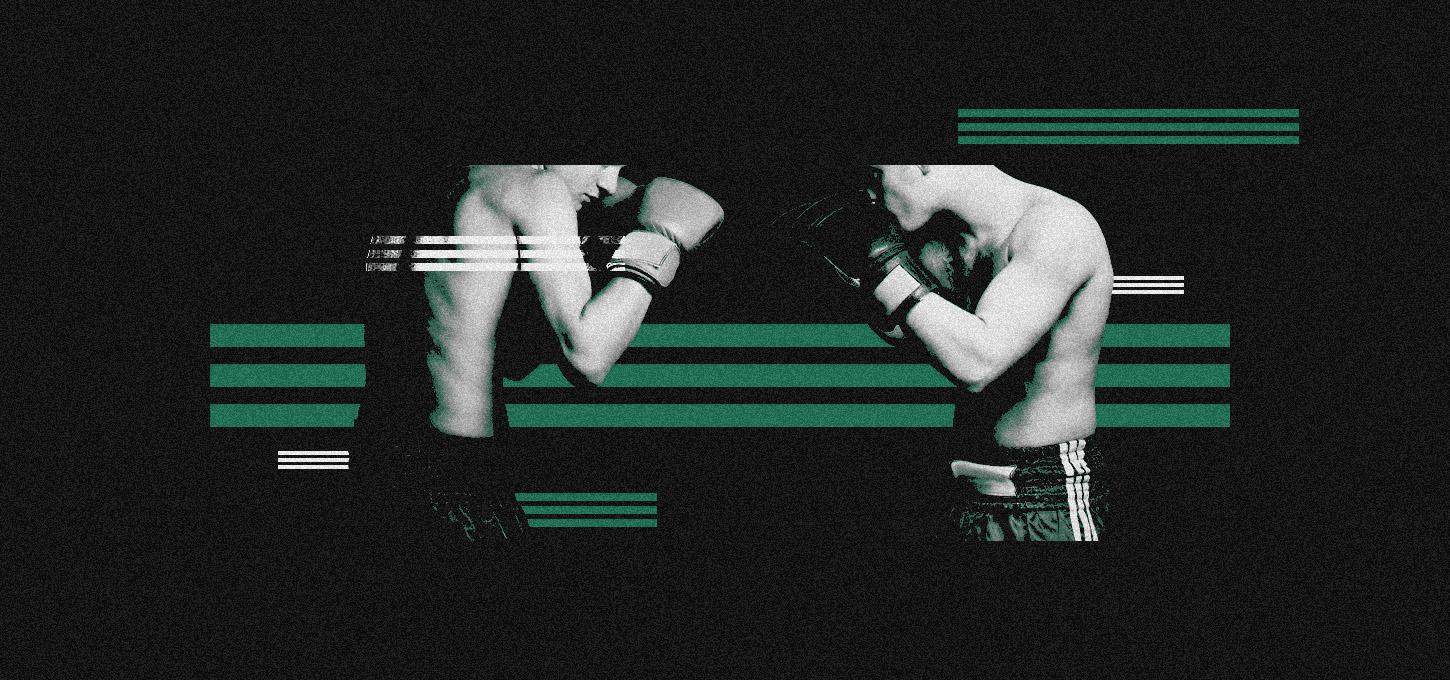
Boxers should stand side-on to their opponent with their feet shoulder-width apart, knees slightly bent, and weight evenly distributed.
There are two stances. Orthodox, where the fighter places their left foot in front of the right foot, and southpaw, in which the right foot leads.
To move around and maintain a strong stance, move your lead foot first when advancing and your rear foot first when moving backwards as this will maintain balance.
Basic Punches
Jab
The jab is the most important punch in boxing. It should be thrown from your basic boxing stance.
To execute the move throw your lead hand out while keeping your rear hand close to your chin for protection. An orthodox fighter would jab with their left hand, a southpaw with their right.
Once the jab has been thrown, bring your arm back into its starting position as quickly as possible to defend your chin from counters.
Jabs can be used to engineer opportunities for bigger shots, to keep your opponent at bay (or ‘on the back foot’) or as part of a defensive strategy to give you time to retreat/move away from the ropes.
A good jab should always be solid, meaning that it has enough power that an opponent cannot simply 'walk through' it.
On a more advanced level it can be used to dictate the pace of a fight and to measure distance before power punches are thrown.
The Cross
Also known as the straight right (for orthodox fighters) or straight left (for southpaws), the cross is a more powerful punch thrown to the head or the body.
Like the jab, the cross is thrown from the basic stance but more power is generated from moving the hips and shoulders.
The cross is generally used in combination with the jab and one basic boxing technique is repeating a jab, jab, cross pattern while shadowboxing to perfect and hone this method so the punches come naturally.
Basic Defence Boxing Techniques
The Guard
A good guard forms part of the boxer’s basic stance. The hands should be raised high enough to protect the chin as well as deflect hooks and straight punches. The elbows are also low enough to deflect blows to the body.
With a strong guard, a boxer should be able to execute two other fundamental boxing defensive techniques, blocking and parrying.
Blocking is where gloves absorb the impact of your opponent’s punches. Parrying is using the gloves to redirect opponents punches, this method can be used to set up counter attacks.
Advanced Boxing Techniques
When a boxer has a good knowledge of the fundamental techniques, they can be a bit more adventurous with their methods and attempt some of the more advanced moves.
Advanced Punching Techniques
There are two particularly devastating punches in boxing - the hook and the uppercut.
The hook comes from the basic stance position, although ideally the weight should be shifted slightly onto the rear foot to generate maximum power. Like a cross the power is generated through a rotation of the hips and shoulders, the elbow should be at a 90-degree angle as you swing your lead hand horizontally.
The uppercut is a punch aimed at the chin and is generally thrown from close range. Ideally it should be thrown from a low stance with knee bent, and again the power comes from the hips/legs. Uppercuts can be thrown with either hand.
Advanced Movement Techniques
The best boxers are experts at creating new angles of attack and this comes from movement and footwork. There are an almost infinite number of ways a good boxer can open up a defence but pivoting on the ball of the lead foot while swinging the rear foot into a new position is one of the more common methods.
Variety of Punches
If a boxer is too predictable, for example if they are constantly targeting one area, they become easier to defend against.
The best fighters will generally work behind their jab, but switch targets from the head to the body and combine the cross, hook and uppercut shots to keep their opponents guessing.
Switching Stances
Some of the very best fighters are able to operate in both the orthodox and southpaw stances.
This may sound like a basic technique but it is in fact incredibly difficult as a fighter has to almost learn the same set of skills twice to be proficient in both stances.
When executed correctly, it can often leave opponents bamboozled as they had to readjust their own style to cope with a fighter in a different stance.
Advanced Defensive Techniques
The best defensive methods can also be strong attacking moves. Slipping and rolling allow fighters to dodge punches entirely, and often they open up opportunities to counter attack.
Slipping is where the head is moved slightly to the side to avoid a punch, usually a jab or a cross.
Rolling is executed by bending the knees and rocking your upper body in a u-shaped motion. This can be used to avoid almost any type of punch when done correctly.
If executed properly, slipping and rolling will make the opponent miss and if they then find themselves off balance it can be the point in which a boxer can unleash their own most devastating attacks.