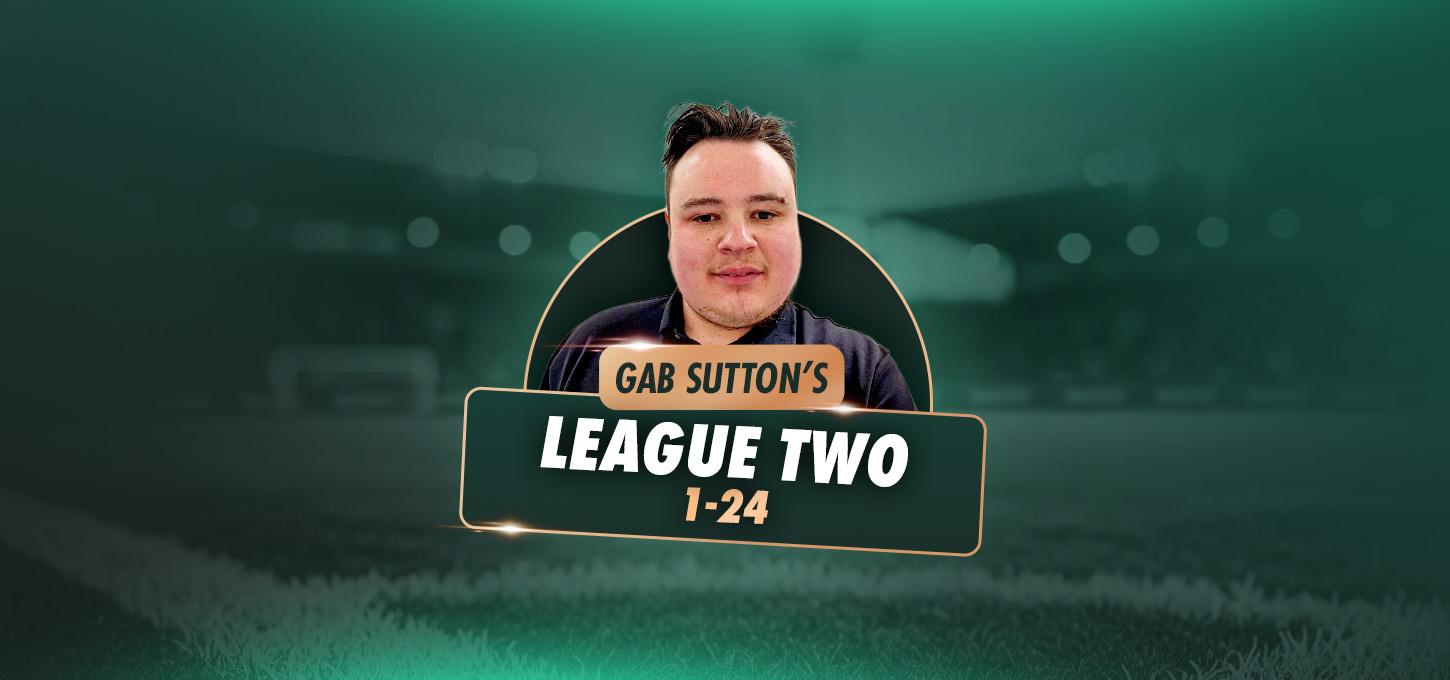
EFL journalist and pundit Gab Sutton has provided his 1-24 predictions for the 2026/27 League Two season.
The start of the League Two campaign is just around the corner, and while the likes of Port Vale and Northampton Town will be looking to book their return to the third tier, newly-promoted York City and Rochdale will be out to prove a point upon their EFL return.
The fourth tier of English football is amongst the most unpredictable divisions in the country, and our man Gab Sutton has provided his eagerly anticipated 1-24 predictions for the 2026/27 campaign.

1. Grimsby Town
One of the best run clubs in English football, Grimsby Town have made significant strides over the last two-and-a-half years.
From survival in 2023-24, to missing out on the Play-Offs on the final day the following season, to making them last year but losing to Salford in the Semi-Finals, the Mariners draw ever closer to being a top three side at this level.
A lot of that has been the club adapting to Artell, and his footballing principles, but Artell has also adapted to the club to some extent as well: the Blundell Park surface wasn’t always the smoothest last season, so Town benefited from being willing to at times play longer into target man Andy Cook.
The club has invested in renovating the pitch this summer, which should enable the team to play more on the deck which feeds into the head coach’s best coaching attributes, but having the option of Cook will help them keep opponents guessing and navigate those arduous winter months.
After scoring seven goals on loan from Bradford in the second half of last season, the veteran rejoins permanently and will, along with all-action midfielder Kieran Green and driven defender Harvey Rodgers, provide excellent leadership qualities.
Growing with the trio will be progressive centre-backs Maldini Kacurri and Cameron McJannet, technical left-back Reece Staunton, and one-touch metronome Géza Dávid Turi, in midfield.
Elsewhere, the club are hoping to retain potent forward Jaze Kabia, after his 18-goal return last season, while direct wide man Charles Vernam is off the back of arguably the best season of his career, bagging double-figures for both goals and assists.
They’ve added to that group in the shape of Joe Foulkes, who arrives with a glowing reference from his former Kidderminster boss Adam Murray, and looks the pick of the summer business.
The main reason to expect improvement, though, is Artell. His leadership qualities and coaching expertise are worth the equivalent of a couple of extra million on the budget, because players consistently grow astronomically under his management.
That reflects on the pitch, where his teams have finished higher than the year before in six of his seven full seasons in management: a continuation of that trend should mean only one thing.
*With love and thoughts to the closest friends and family of Alex Hughes, the Head of Recruitment, who sadly passed away this summer at just 38 years of age. We send everybody connected with Grimsby Town Football Club our deepest condolences.
2. Bristol Rovers
Bristol Rovers’ 2025-26 campaign was nothing if not streaky.
In the first half of the season, they went from three straight defeats to start the season, right into five wins in seven unbeaten, and then to the 10 straight defeats that cost returning club legend Darrell Clarke his job in December.
Replacement Steve Evans’ impact wasn’t instant, with 10 points from the next 12 causing Gasheads to wish for the season’s conclusion, but after 11 wins in 14 ensured midtable security, they were instead wishing it lasted another month.
Although 2025-26 had some major low points, however, with significant question marks over the Al-Saeed ownership regime, the abiding memory will be of Steve Evans joining the fans on the terrace for the last 10 minutes of the final home game, a 4-0 win over Cheltenham, and soaking in the adoration.
So, it’s a case of picking up where they left off, and high retentions should help, with permanent signings of popular loans in powerful defender Kofi Balmer and midfield anchor Richie Smallwood, plus energetic attacking midfielder Tommy Leigh back for another year.
15 players who featured regularly during that excellent form remain at the Mem as part of first-team plans, including positive late season contributors: goalkeeper Brad Young, talented defender Riley Harbottle, versatile midfielder Clinton Mola, elusive forward Shaq Forde, and athletic striker Promise Omochere – although the latter starts the season injured.
Plus, League Two’s Apprentice of the Season, Ollie Dewsbury, returns from an excellent loan at Weston-Super-Mare.
Joining the 16 are solid and reliable wing-backs in Tom James and Ben Purrington, cultured defender Ciarán Kelly, plus skilful forwards Bobby Kamwa and Jack Aitchison.
The Gas look solidified under Evans, who’s proven himself to be an excellent motivator, and there’s been an instant improvement in the standard of recruitment under his watch.
The big question is whether they can spread the goals around the team, with target man Joe Quigley likely to play provider rather than be prolific, but they have aforementioned forwards who can regularly chip in, as well as one of League Two’s best finishers in Fabrizio Cavegn – if Evans can find a way to incorporate the sharp-shooting Swiss.
Overall, the last three months of 2025-26 almost had the feeling akin to a promotion season in the Thatchers End, even without anything remotely resembling the reality of one.
Can keep that feel-good factor across the summer, and it may become a self-fulfilling prophecy.
3. Barnet
Barnet made a fabulous addition to the Football League last season.
After storming to the National League title with 102 points, offering an exciting, attacking brand of football, the Bees took a few games to adjust to League Two.
Yet after four defeats in the first seven, then a fortuitous 2-1 win at Crewe thanks to two penalty saves from Ciaran Slicker, boss Dean Brennan changed tack.
It’s actually contested among supporters whether he changed formation from a back-three to a back-four, which highlights how the setup remained very flexible, but the passionate Irishman did, in general, make three subtle tweaks.
Adam Senior moved further right of Danny Collinge and Nik Tavares, the former shifted to the right of the latter, and Kane Smith shuffled over to a left-sided defensive role that, following injury, was eventually taken by Romoney Crichlow.
The amendments allowed the North Londoners to implement their style with greater solidity, contributing to just eight defeats in the next 38 games, with only 42 goals conceded, whilst they continued to establish themselves as one of the division’s most creative sides.
That creativity, though, didn’t always translate into goals: Barnet scored just 32 of them in their first 25 games, but that was before Brennan signed Kabongo Tshimanga.
The capture from Crawley defied his doubters with a debut brace in January’s 3-2 win over Oldham, and finished the season as second-top goalscorer with 12, as the team grew in confidence – they scored 38 goals in their final 21.
Indeed, Barnet finished with 22 points from the last 24 available, dropping two only against eventual champions Bromley, with wins over automatic promotion candidates MK Dons, Cambridge and Notts County showing they’re capable of beating the very best at this level.
So, the good news for the North Londoners is that, if they can extrapolate their second half of the season form over a full campaign, they could be serious promotion contenders.
The bad news? They’ve just lost their most creative player, with flair wide man Ryan Glover moving to Stockport, on-loan goalkeeper Slicker is back at Ipswich, and the midfield is in rebuild.
Glover, they hope, can be replaced by the dexterously effervescent Tom Knowles, while Brentford loanee Matthew Cox and Stevenage recruit Taye Ashby-Hammond offer stiff competition for the goalkeeping jersey in Slicker’s absence.
In midfield, Brandon Comley and Oisin Gallagher hope to provide tougher, more solid alternatives to departing deep-lying playmaker Antony Hartigan, while Charlie Lakin and Isaiah Noel-Williams replace all-action #8 Mark Shelton and second striker Callum Stead respectively.
Midfield recruitment leans heavily into the pressing aspect, with a significant focus on physicality and industry over flair and vision.
The main indication is that Barnet will look to create chances through, firstly turning the ball over, and secondly, wide centre-backs – Collinge, plus Will Wright or Zac Williams – roaming forward, with a Comley or a Gallagher slotting into defence.
The idea is that they’ll create chances through the fluency of their system, and because it isn’t about stopping any one individual player, it can be difficult to work out how to contain them.
There may be a world where those rotations and interchanges don’t quite land, and they’ll need an extra smattering of stardust – winger Bright Siaw may provide it as a sensational homegrown prospect, but is likelier to spend time on loan and be one to watch in 2027-28.
To some extent, then, the difference between Play-Offs and automatics could lie in remaining additions.
A classy playmaker to pull the strings, and complement an outstanding all-round midfielder in Nnamdi Ofoborh, or that skilful attacking midfielder who can slot through Tshimanga - or Darlington recruit Jack Maskell, described as an ‘untamed animal’ by scouts – could be a real game-changer.
Everything else is in place…
4. Salford City
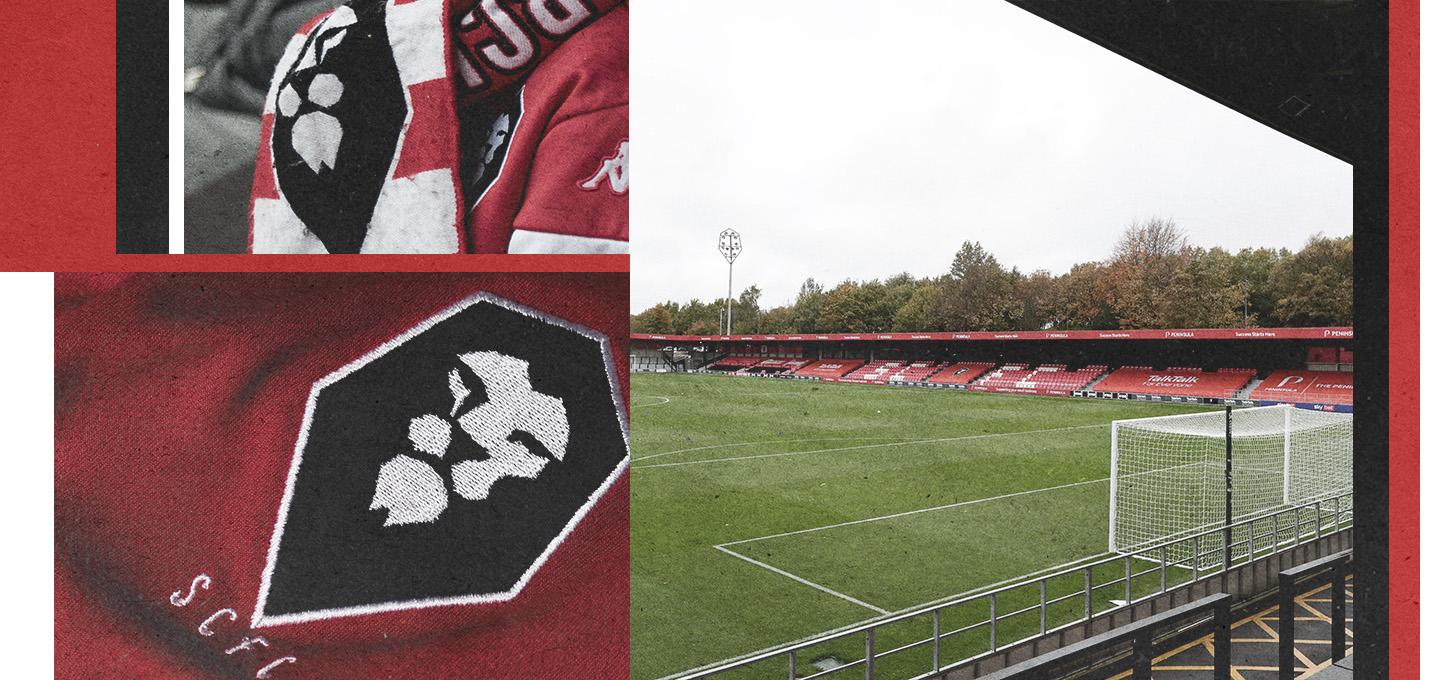
Salford City’s no-show in the League Two Play-Off Final, a 3-0 defeat to Notts County, put an end to Karl Robinson’s tenure.
The Liverpudlian made respectable strides with the Ammies, succeeding where those before him failed in terms of translating resources into results, but style may have proved a stumbling block for the hierarchy, who have replaced him with Peter Cklamovski.
The 47-year-old arrives, one imagines, with a glowing recommendation from Ange Postecoglou, and CEO Gavin Fleig, who has had him on his radar for a decade, from his time working in Australia with City Football Group.
Since assisting Postecoglou with the Socceroos, Cklamovski has been managing in Japan, where he’s acquired a reputation for being a fantastic in-possession coach, but with one significant pitfall: his teams can be too open and easy to score against.
FC Tokyo, for example, have a prolonged history in the J-League of being a top defensive side, but that couldn’t be maintained under the Sydney-born boss’ guidance.
So, on the one hand, the attacking potential for League Two’s big-spenders is enormous:
Will Norris starting off attacks with great panache, midfielder Joe Powell drifting out to link up in wide areas and create space for Luke Molyneux and hopefully still Kelly N’Mai to do damage, then fashion chances for a ruthless finisher in Macaulay Langstaff.
The former Millwall front-man, though, has turned up for pre-season a smidge out of shape and, while he’s been in great goalscoring form, may not be able to press with the same relentless ferocity he did for Notts County, which returns us to defensive risks.
High-energy #10 Kallum Cesay may have to do most of Langstaff’s pressing, which he is perfectly capable of doing, but it does mean that it could become easier for opponents to clip the ball into the centre for three-on-two situations, against a midfield that may miss an athletically destructive, Ossama Ashley-like presence.
That two-man midfield, as things stand, will be Powell and Matt Butcher: the former, as above, will be given plenty of creative licence, while the latter has hit a physical decline in the last 12 months and could find himself completely swamped without the correct support.
A shortage of powerful, tenacious profiles in midfield and attack could see Salford compromise on the press, which means their in-possession work will have to do a lot of the heavy lifting.
Meanwhile, they’ve signed Molyneux as a left-footed inside forward, who has did all his best work at Hartlepool and Doncaster with a right-back flying forward on the overlap; whereas, what Cklamovski seems to want is his right-back to invert into midfield, creating a box-3-2-1 in-possession shape.
Salford will feel they can create space for Molyneux through artificial transitions, which have worked nicely in pre-season – but what happens when opponents don’t take the bait?
The caveat, of course, is that Salford have the money to troubleshoot these issues, in both the remainder of this window, and the next one, plus they can still win games while imbalanced due to the sheer individual quality within that front-three – but arguably not enough.
Across the last four seasons in League Two, five of the 12 automatically promoted teams have done it ranking outside the top five on goals scored, whereas not even one of them have done that on goals conceded.
Sir Alex Ferguson once said that “attack wins you games, defence wins you titles” - Salford have the stardust to thrill, but will they have the defensive resolve to grind out points when it matters most?
5. Oldham Athletic
If one were to equate the last four years at Oldham Athletic to any movie scene, it would probably be the ending of The Lion King.
With Abdallah Lemsagam’s scarring tyranny overthrown, fond head bumps between new owner Frank Rothwell and manager Micky Mellon, and club legend Joe Royle holding CEO son Darren aloft at Boundary Park, the sun’s out and Oldham feel like Oldham once again.
That feel-good factor has translated onto the pitch, with the Latics returning to the Football League at Wembley in 2024-25, then managing a respectable top-10 finish in their first season back.
The spirit and togetherness around the club, and among a squad of which up to 15 players may remain from last season, means stability and harmony represents their greatest strength.
In stunning shot-stopper Mathew Hudson, an uncompromising centre-back pairing of Donervon Daniels and Manny Monthe, reliable left-back Jamie Robson, speedy wide forward Kane Drummond, and selfless target man Mike Fondop, they have some great foundations.
They’ve added to that with what could be a tenacious midfield pairing, in the experienced Oli Norburn and the more frenetic Keenan Appiah-Forson, which should make Oldham a nightmare to play through.
We can expect, then, that Mellon’s merry men should have a high floor in performances, and there’s unlikely to be many teams that lose fewer games than them this season.
The big question, therefore, in terms of Play-Off and certainly automatic promotion ambitions, is whether there’s enough star quality in a team that was solid and creative last season, but also wasteful, outside February and March.
The club will feel they’ve added more in that regard, with Gus Scott-Morriss hitching up in OL1, after scoring 17 National League goals from right wing-back last season for Southend, and has already shown signs in pre-season of linking up nicely with winger Favour Fawunmi.
Plus, Noah Chilvers showed enough in his time at Colchester, and at Ross County, prior to doing his ACL last year, that he can be an upgrade on Kai Payne in attacking midfield.
It remains to be seen, however, whether the industrious Elliott Nevitt can replicate his stellar 2023-24 season at Crewe after a barren couple of years at Gillingham, or whether the club can overcome the loss of winger Jack Stevens to injury in pre-season.
So, if Oldham miss out on the top seven, it will probably be for want of that extra sprinkling of quality, that’s always difficult to attain without an top-end budget.
If they make it, however, it’ll be the result of understandings and partnerships forged across the park, impeccable consistency and dependability, and a fantastic culture.
As we saw with Bromley and Cambridge last season, sometimes that can be a nice recipe…
6. Port Vale
Port Vale’s improvement under Jon Brady, in the second half of last season, wasn’t enough to keep them in League One, but it was enough to prompt optimism for their League Two return.
After a mere 15 points from 21 games under Darren Moore, then one win and defeat apiece under Jamie Smith’s interim tutelage, Brady oversaw a respectable 24-point haul from his 23 games in charge, albeit not enough to salvage the season.
There were a few no-shows, but they were balanced by wins over Bolton and Stockport, plus Sunderland in the FA Cup, from which the club could take encouragement into the summer, with a view to reproducing those showings at a greater volume.
Helping that cause are the new recruits: assured goalkeeper Jackson Smith, intelligent defender Jasper Moon, cool midfielder Matty Craig and the spicier Kyle Dempsey, who should improve the Vale in defensive and middle thirds.
Plus, fans in recent memory saw what tall, aggressive defender Connor Hall, cultured midfielder George Byers, powerful box-crasher Ben Garrity, playmaker Rhys Walters and ball-winner Ryan Croasdale can do in League Two.
While midfield carries laudable depth for the Valiants, who possess six players in that area that most of the division would love to have, other areas feel weaker: namely, centre-forward.
Wrexham loanee Mo Faal has only scored one league goal in two years of football and 29 appearances, Luton loanee Oli Lynch is stepping up after a positive season in the National League, while tightened budgetary constraints suggest any further centre-forward additions are likelier to pad out the squad than really move the needle.
It’s a group that may require more than one transfer window to fully re-balance, so it’s fair to expect Vale to collect more points in the second half of the season than the first.
Brady, however, inherited a similar situation at Northampton, and very quickly assembled some water-tight out-of-possession principles, that saw them keep 21 clean sheets in their first season down, missing out on the automatics on the final day.
This Vale group looks more capable of controlling games than that one so, even as a side in small-t transition, a top seven finish looks well within their range.
7. Crewe Alexandra
There’s an awkward chasm between expectation and reality at Gresty Road.
Crewe Alexandra boast one of the most notoriously calm and patient fanbases across the English game yet, quite naturally for those following a 105-year Football League mainstay, that patience is infused with a subtle hint of expectation whenever they’re in the basement tier.
There’s little novelty in a League Two Play-Off tilt for supporters that have seen their club play higher this decade, and so the scale of overachievement in the last few years goes under the radar, both internally and externally.
On one of the division’s lowest budgets, the Alex have been in the top seven for 55% of the last three seasons: they’re firmly in the conversation every year.
They may have unique advantages, like the investment in their youth system, which allows them to bring through good players on lower wages than the same level of ability would otherwise command in the open market, but the academy model has plenty of pitfalls as well as perks.
In order to get the 2025-26 versions of intelligent right-back Lewis Billington, creative midfielder Matus Holicek, energetic presser Owen Lunt and stealthy wide poacher Calum Agius, when they’ve become good, high-end League Two performers with potential for further growth, Crewe had to persist with the less refined 2024-25 versions.
Similarly, in order for Wales youth right-back Stan Dancey, energetic midfielder Owen Taylor, smooth creator Luca Moore and PDL Under-17s Cup-winning winger Patrick Mlynarski to have great 2027-28 campaigns that generate big-money sales, they’ll need the minutes to acclimatise this season.
It’s a constant balancing act for Lee Bell, who has demonstrated excellent adaptability and man management qualities to keep the team in contention, ably assisted by an excellent coach in Ryan Dicker, and Technical Director in Josh Kennard.
Recruitment looks smart once again, with aggressive defender Luke Offord and forward-thinking midfielder Joe White coming back to the club, along with a new face: enigmatic winger Jordan Gibson, who can be unstoppable at his best.
With Reece Hutchinson bringing drive and verve from left-back, and centre-back Mickey Demetriou being a sensational ambassador for the club on and off the pitch, Crewe have a promotion-winning capable starting XI when everyone’s fit.
Injuries, however, have been what has undermined recent promotion bids, so the Alex require a re-think around sports science, a recruitment policy weighted more towards physically robust players and, ideally, a touch more depth – easier said than done on a modest budget.
Crewe have done well to retain key personnel as things stand, though, and with the correct tweaks, should squeak into the Play-Offs this time around.
8. Walsall
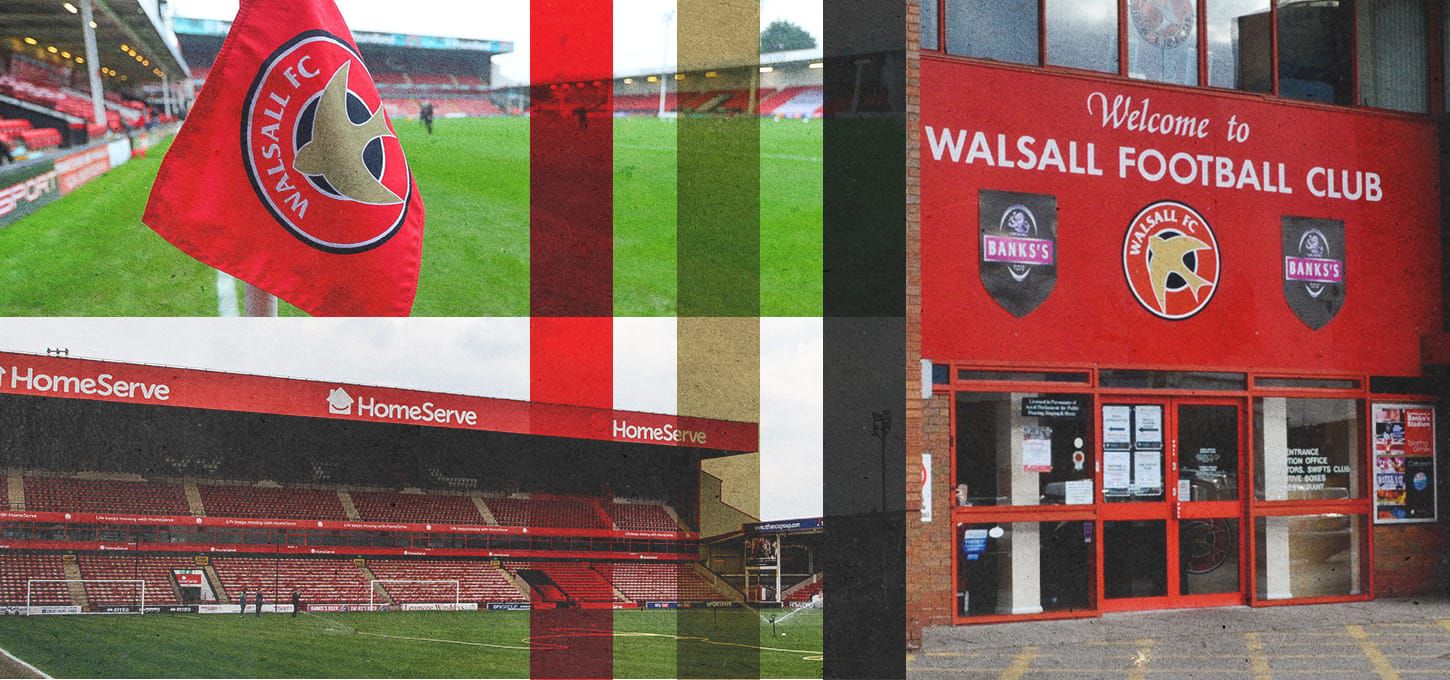
The first four years of Trivela Group’s ownership of Walsall have been a mixed bag.
As a structural entity, the Saddlers are unrecognisable: they have a terrific CEO in Ben Sadler, a newly-created Head of Football role taken up by the highly-regarded Stewart Mairs, and various other highly competent people devoting full-time roles to several different remits that used to all come under far fewer job specs.
As a day-to-day operation, they’re as well-run as anyone in League Two, and eventually, that should translate to the playing side – but the impact so far has been contested.
On the one hand, Walsall have been in the top 10, including top of the league, for large swathes of the last three seasons, so it’s not as if they’re miles away on the pitch.
However, a combination of unconvincing performances last season, the tactical clarity vs rigidity debate and limp finishes, compromises the fan experience: progress has undoubtedly been made, but only in ways that are smaller and subtler than most football fans are likely to be overly enamoured with.
2026-27 is about adding style to structure, then, and out to deliver that is Lee Grant, who arrives at the Bescot with an impressive coaching profile from his work at Manchester United and Ipswich, and off the back of a first managerial stint at Huddersfield.
Grant’s stint with the Terriers didn’t go entirely to plan, and he did face scrutiny on tactics and selection in West Yorkshire, but he also left them in the top six of League One as the division’s top goalscorers in his first job as a number one.
The exciting aspect of the squad Grant inherits, is that they’re mainly up-and-comers approaching their peak: 15 of the 21-man squad are aged between 20 and 25, while 16 have risen from non-league in the last three years.
This group is broadly heading north on their M6 careers, not south to Spaghetti Junction, and that hunger to prove themselves as Football League players could prove powerful.
Talented shot-stopper Jed Ward, midfield technician Lewis Simper, on-loan box-to-box midfielder Isaac Moore and selfless attacker Reece Smith, all arrive with plenty of potential.
Likewise, prolific goalscorer Tai Sodje, who scored 19 goals for Manchester City’s Under-18s in 2020-21, linking up with the likes of Oscar Bobb, Romeo Lavia and Liam Delap, before injury stunted his development.
Sodje briefly dropped down to the National League North with Buxton to prove his fitness, and senior football capabilities, but people in the industry believe he’s more than ready for the EFL.
Elsewhere, towering defender Harrison Burke and versatile wide man Courtney Clarke, having had a season to acclimatise from non-league, could be ready for a year of significant growth.
Similarly, Elicha Ahui was among Drogheda’s best players during his loan in the League of Ireland and could, after a welcome summer to recuperate, be ready to replicate that form, while attacking left-back Mason Hancock hopes to be fit for the full campaign after impressing early on last year.
There’s a sprinkling of experience in there, too: Alex Pattison starts the season sidelined, but the evergreen Albert Adomah is a model pro with a charmingly self-effacing zimmer-frame celebration.
They’ve added further support in the shape of midfield battler Sven Sprangler, superb at Newport, and defender Ryan Leak, voted signing of the season at Ross County in 2023-24.
The Saddlers only have 14 players we’re confident in, so a promotion push will require a combination of a few others defying their doubters, luck with injuries, and a strong end to the window – otherwise, they may narrowly miss the cut.
Either way, the growth potential is clear, and they’ll finish the season in a stronger position on and off the pitch.
9. Chesterfield
Chesterfield’s promotion bid last season was undermined by inconsistency.
The Spireites began with three straight wins, and finished eight unbeaten, yet across the intervening 35 matches, Paul Cook’s side only put back-to-back league victories together once: December’s run of three in a row.
The Derbyshire outfit had more than enough experience, and individual quality, to finish in the top three, but were hamstrung by injuries for a second season running, and didn’t get the loans right until January, when Sam Curtis, Sil Swinkels and Sammy Braybrooke lifted things significantly.
Moving into this season, the right-back, centre-back and playmaker respectively will take some replacing, and it’s hard to say with confidence that that’s been done emphatically.
19-year-old versatile defender Junior Eccleston looks a great long-term investment from Sutton, but could be a more conservative option for right-back, and while Remeao Hutton did well at Barrow and Swindon, he arrives with reduced stock after a tough time at Gillingham.
The club have understandably had to replace Braybrooke in two players: the playmaking aspect, in George McEachran, poached from Grimsby, and the dynamism aspect, in Rafiq Lamptey on loan from Millwall.
The latter may also serve as a rotation option for 35-year-old battler Tom Naylor – much though the veteran continues to roll back the years with the attacking gusto he can still bring in certain moments.
On the plus side, Chesterfield now have a like-for-like replacement for persistent poacher Lee Bonis, who should be well-placed to score more than the 12 goals he managed last season.
Last season, the rotation options were limited to Will Dickson, who’s more of a false nine or number 10, and Will Grigg, who’s embers are dying slightly at 35, whereas this year Cook can bring in Fraser Bryden, after the 22-year-old scored 23 goals in the Northern Irish Premiership to keep things fresh.
Josh Koroma and Ruel Sotiriou can also add to the attack from more withdrawn roles.
Both can be a tad mercurial but, firstly, Cook has an excellent track record of helping enigmas re-focus because of his passionate motivational qualities, and secondly, both worked successfully with coach Danny Webb at Leyton Orient.
So, in essence, Chesterfield have a best XI that might miss star loans from the second half of last season, but they also have a squad that may be better-equipped to navigate the injuries.
The effect could be net neutral, leaving the Spireites at roughly the same level as the team that made the Play-Offs, but at risk of being a casualty of a strengthened league.
10. York City
This was supposed to be the most exciting era in three decades of York City history.
Not only did the Minstermen end a period of 18 years in 22 outside the Football League by winning promotion from the National League last season, they did it by clinching the title with a whopping 108 points, thanks to a dramatic leveller in the 13th-minute of stoppage time in the final day’s six-pointer with Rochdale.
Josh Stones’ Spotland strike sent them back to the EFL with heaps of ambition, and as one of League Two’s promotion favourites – until Sunday 26th July.
The news broke that Stuart Maynard had left the LNER Community Stadium, supposedly over dissatisfaction with his lack of input on recruitment, with some of the signings reportedly ones he hadn’t given the green-light.
It’s not as if City had a super technical, analytical recruitment team who were picking the players, of profile types Maynard had outlined: rather, it seemed to be owner Matt Uggla having an excessive influence on signings, with limited qualification.
And, when the reaction to the parting was inevitably negative, Uggla took to social media to make melodramatic statements that suggest somebody who still has some maturing ahead of them.
There’s immense gratitude for what the Uggla’s have done for York City, their contributions to arguably the greatest season in 42 years and the potential they’ve helped to unleash, but late-July’s events have put a bit of light drizzle on the club’s parade.
On the plus side, incoming manager Scott Lindsey is not new to working with owners of comparable character to Uggla, able to draw on his experiences at Crawley, and hopes to emulate the promotion-winning achievement of 2023-24 on a much bigger budget – and that’s where the positives come in.
The investment at York has helped them retain 34-goal top scorer Ollie Pearce for his playmaking and poaching prowess, and tie star forward Josh Stones down to a five-year contract, warding off reported interest from Sheffield Wednesday.
The Minstermen lost one key defender, Malachi Fagan-Walcott, to Hearts, but they’ve retained another in the well-rounded Zak Johnson by picking him up permanently from Sunderland, and snatched energetic midfielder Arthur Read from divisional rivals Colchester.
With adventurous left centre-back Mark Kitching, diminutive playmaker Alex Hunt, dynamic midfielder Hiram Boateng and the creative Ollie Banks also in situ, York do have a group that could push for another promotion.
It’s just a question of how much recent events will disorientate the fanbase, and possibly knock the team off their stride at the worst possible time.
11. Northampton Town
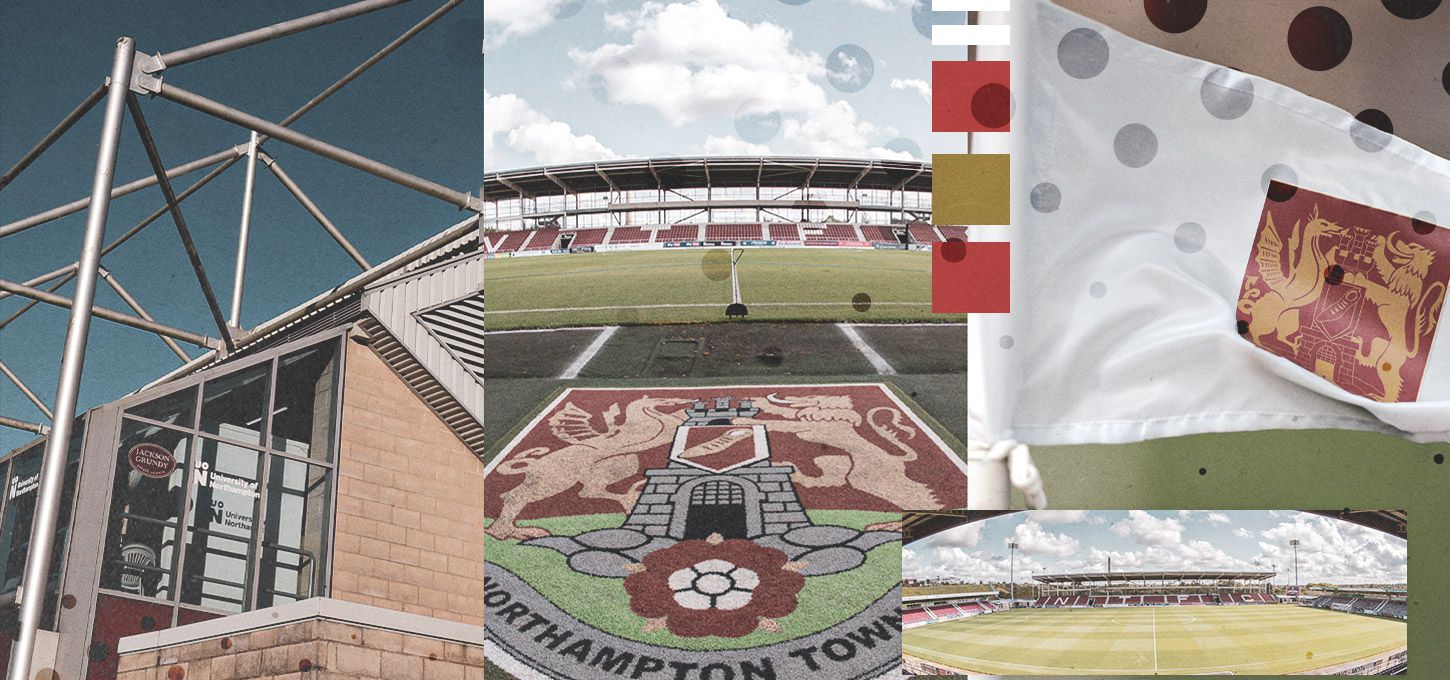
For five-sixths of Northampton Town’s three-year League One stay, they had been admirably competitive on a minimal budget – but that changed in the final half-season.
January inactivity and questionable leadership proved a bad mix, the result of which was a return of just eight points from the final 25 games, including an 11-match losing streak to send them down with a whimper.
So, the League Two rebuild is all about restoring some pride in the badge at Sixfields, and ensuring that Kelvin Thomas hands a competitive team over to the new owners, if the mooted deal with a ‘well-funded’ group goes through.
The good news, then, is that new boss Chris Hogg arrives with fantastic coaching pedigree.
The 41-year-old might be a number one for the first time but, crucially, he has ample experience of coaching in a first-team environment, and has been heavily credited for his role in Liam Manning’s successes at MK Dons (first season), Oxford and Bristol City.
In the industry, meanwhile, the Smoggie is believed to be an extremely talented, hardworking and technically astute coach, who knows how to step away from the intensity of the job and take the bigger picture view.
If Hogg lives up to his billing, then, a top half finish looks likely, but where within it depends on the status of the squad come September.
On the one hand, Teyn have talent, in highly-rated goalkeeper Zack Jeacock, on loan from Lincoln, attacking midfielder Logan Briggs, a PL2 POTY nominee, on loan from Leicester, and striker Matty Warhurst, poached from Man City EDS.
They’ve also added a cultural architect in 32-year-old full-back Janoi Donacien, who brings higher level nous and professionalism, as well as valuable versatility.
17 players who were part of last season’s capitulation, however, remain at Sixfields, so it may be difficult for Hogg to implement everything he wants to in his first season.
Next summer, the Cobblers will have most of the aforementioned 17 out of contract, and probably new owners in from the outset, both of which should make the squad-building process much simpler: promotion could be a two-year job.
12. Colchester United
The takeover collapse at Colchester United simultaneously lowers their long-term ceiling, and raises their short-term floor.
In order for the U’s to meet their ultimate ambitions, and sustainably compete any higher than League Two, they need greater investment, new energy and fresh ideas from the top of the club, and they’re unlikely to get much of that whilst Robbie Cowling remains owner.
Takeovers, however, often accompany uncertainty for managers, and the Essex club have one of the division’s strongest management teams in Danny and Nicky Cowley, so the fact that they’re more sure of the state of play could work favourably.
Colchester have lost key players, like Kyreece Lisbie, Arthur Read and on-loan Micah Mbick, as well as valuable performers in Matt Macey and Owura Edwards, but they’ve clung onto a reliable core.
Intelligent defender Jack Tucker and technical left-back Ellis Iandolo, plus creative maestros Teddy Bishop and Jack Payne, remain in Essex along with aggressive wide man Harry Anderson, who’s off the back of his most productive season yet with 11 goals.
Meanwhile, combative midfielder Ben Perry only played three games last season due to a long-term injury picked up in August, whereas this year he may have the opportunity to live up to his lofty billing from Nottingham Forest.
Tasked with replacing Mbick, on the other hand, is Leon Chiwome, who joins on loan from Wolves.
Although not quite as quick as last year’s Charlton loanee, the 20-year-old makes up for that with razor-sharp movement and brute strength, qualities that saw him scoring for England Under-18s.
Chiwome’s taken a hit since then with long-term injuries, but his talent is unquestionable, and Colchester have some of that of their own, in defenders Frankie Terry, Sam Kuffour Jr, and midfielder Milton Oni – mooted to be the next big money move in CO4.
So, after adding some extra size and experience to defence and midfield units in the shape of Sean Raggett and Paul Digby, there are some hopeful signs that key losses could be partially offset.
At the same time, it does feel as though Colchester could come out of this window with, on balance, a marginally weakened squad.
They might have stability, but they don’t have much momentum…
13. Rotherham United
Rotherham United come down to League Two as the team in the division with the greatest range of possibilities.
On the one hand, the Millers have some deep-rooted structural and cultural issues that have precipitated two relegations in three seasons, and it’s very clear that they need the right takeover from owner Tony Stewart to get back onto an upward long-term trajectory.
It’s an open secret that new boss Alex Bruce was not among the first choices for the role at the start of the summer, and it’s fair to say the first time head coach doesn’t have the most glittering coaching CV.
That’s not always a problem: the profiles of Ronnie Moore and Paul Warne wouldn’t have initially leapt off the page either, and sometimes these unique circumstances can unleash some fantastic managerial careers.
The minor uncertainty over Bruce, however, is not ideal when put in tandem with a window of recruitment that, in a crucial summer of post-relegation rebuild, has been unsuitably slow.
After going down, the club would have wanted as much of the new group as possible to be in situ for the first day of pre-season training, unburdened by last year: they only had one, Fabio Tavares, in at that point, which hardly screams new beginnings.
The question marks are obvious, then, but on the other hand, the South Yorkshire outfit do have players who could be above the level.
For starters, complete right-sider Denzel Hall will be one of the best players in this league, if he can recover from the injury that many felt contributed to heavily to last season’s relegation, while technical-but-enigmatic forward Ar’jany Martha has played nine games for Ajax.
Elsewhere, creative midfielder Kian Spence has impressed for three consecutive seasons at this level with Barrow, and 21-year-old wide utility man Marvin Kaleta earned a professional contract at then-Premier League Wolves four years ago.
Joining that group are speedsters Aaron Nemane and Tavares: the former is a speedy, versatile winger who helped MK Dons to promotion last season, the latter, a forward who scored four goals in League One for Burton, averaging one every 231 minutes.
And, while Bruce might have been a time-conscious appointment based on gut feel after a strong interview, the rookie will have the support of experienced Steves Bruce, Agnew and McClaren – it helps that he can just call the first one ‘dad’ to limit confusion.
Assistant Agnew is a highly established coach who’s worked in the Premier League, and McClaren, Head of Football, brings a wealth of experience.
In the industry, the 65-year-old is respected as highly as almost anyone, and for the club to be able to attract somebody of his calibre to run the football side is something of an underrated coup.
The former Manchester United assistant’s contacts should be useful for high-end loan deals at the end of the window, even if the club have likely had to lean more on Rob Scott for seasoned, proven, dependable types in the permanent market, as Ossama Ashley and Jamie Jellis bring athleticism to the midfield.
So, who knows? The realistic extremes at either end are further apart for Rotherham than any other side, due to the chaotic concoction of high-end talent, with a possible lack of knowhow, leadership and cohesion.
The likeliest outcome lies somewhere in between: a midtable season of hectic unpredictability.
Don’t be surprised to see the Millers outplay the leaders one week, then get outfought at strugglers the next.
14. Cheltenham Town
Steve Cotterill’s homecoming was exactly what Cheltenham needed last season.
After a meagre four points from the first 10 games under the previous regime, Town’s greatest ever manager returned for a second stint to update his legacy, save their Football League status – and hopefully now do even more.
The childhood Cheltonian won three promotions and an FA Trophy with the Robins in his first spell, before leaving for Stoke in 2002, and returned a near quarter-century later to a warm reception in his first game in charge, which proved a major turning point.
That homecoming 2-0 win over Fleetwood gave way to a return of 48 points from 36 games: slap-bang midtable form, and more than enough to avoid the dogfight with some comfort, as Cotterill’s reputation, and commanding leadership style, translated predictably to a strong in-season impact.
Whether he’ll be the one to ignite the new era under Mike Garlick is highly possible, but less of an absolute sure bet: minor question marks linger over managerial growth potential, in what could be his final job in this role, and long-term structural compatibility with a club looking to expand.
Then again, he’ll have a better-rounded squad to work with than the one that was assembled largely under the previous ownership regime, on a much more limited budget, albeit without the match-winning brilliance of Jordan Thomas and Isaac Hutchinson.
Technical left-back Joe Tomlinson from MK Dons, plus high-potential goalkeeper Wyll Stanway and dynamo Charlie McCann from Barrow, represent exciting captures – the latter could forge an excellent midfield pairing with cultured anchor man Ben Stevenson.
So, with three Football League proven defenders (plus emerging homegrown talent Mark Barber) competing to share a rear-guard with athletic, versatile defender Jonathan Tomkinson - in aerial powerhouse Robbie Cundy, the experienced James Wilson and the progressive Pierce Sweeney – the Robins have some rock-solid foundations.
The big question mark, however, lies in attack, where Jake Bickerstaff and George Miller don’t quite move the needle, with depth and quality lacking both out wide and down the middle.
They’ve been heavily linked with Daniel Udoh, out-of-favour at Salford, with whom Cotterill has worked successfully in the past at League One level with Shrewsbury.
Udoh is a first-class character and would make an excellent focal point for Town’s attack, if he does join, while fresh talent is likely to arrive on loan.
The right final sprinklings of pace and flair could swing things, but they’ve left it late with forward recruitment, and discovering an attacking synergy could be a work-in-progress.
As things stand, Cheltenham have the makings of a low-scoring side: stick the Under 2.5s in your accumulators…
15. Rochdale
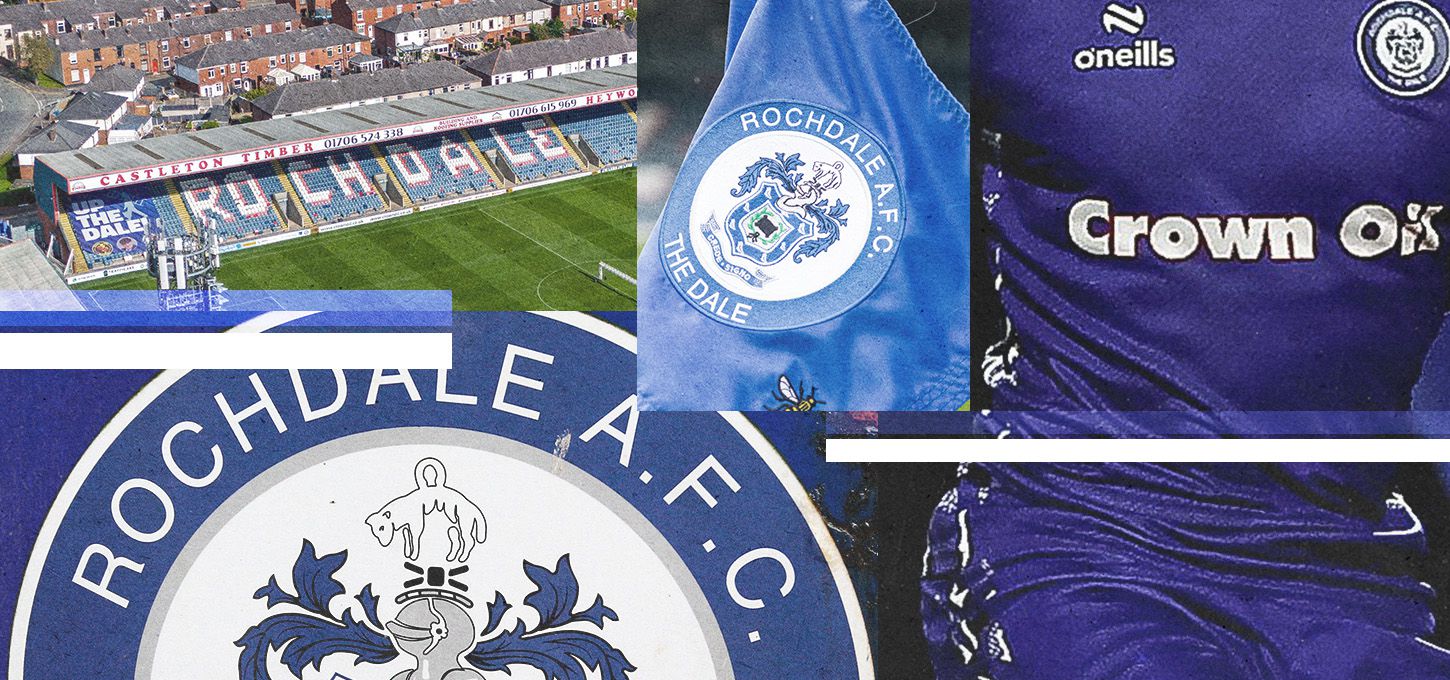
Rochdale are on their way back.
The Dale were once among the Football League's model clubs in terms of development and sustainability, managing three successive top half League One finishes in the mid-2010s under Chris Dunphy and Keith Hill’s respective ownership and managerial leadership.
What followed their departures, though, was mismanagement off the pitch, primarily from dodgy director David Bottomley, which meant chairman Simon Gauge and others had to put more of their energies into financial and legal battles, contributing to a second relegation in three seasons and the loss of the club’s 102-year Football League status.
The club has been transformed, however, since the Ogden family completed a long-awaited takeover in 2024, and oversaw a successful rebuild on the field: the Lancashire club improved year-on-year under Jim McNulty, culminating in last season’s whopping 106-point haul, and promotion via the Play-Offs.
Alas, McNulty has since departed for Stockport and been replaced by Ian Watson, poached from South Shields.
Whereas his predecessor was an extreme disciple of possession-heavy football, Watson is more flexible, which could be a net neutral switch.
On the one hand, the Dale might miss some of the stylistic clarity and strategic continuity they had under McNulty, which was a key part of their success.
On the other, it may help them apply last season’s template with greater balance and adaptability, which could end up proving more appropriate for the step up on a modest budget.
Especially, that is, considering Rochdale have suffered key losses in loanees Oli Whatmuff and Callum Perry, plus defender Kyron Gordon – goalkeeper, left centre-back and right centre-back in their defensive trio respectively – although replacements have been found.
Nils Ramming arrives on loan from Brighton, with rave reviews from his former Eintracht Frankfurt II coach Dennis Schmitt, who says “he is a huge talent to me and has everything to become a great goalkeeper”.
Fellow loanee Kaiden Wilson joins from Chelsea, perhaps to replace Gordon, off the back of an excellent season in the PL2: tall, strong, and agile for his height, the 20-year-old should slot in well, alongside more experienced defenders, including the incoming Sam Sherring and Laurence Maguire.
What’s more in question, however, is whether Rochdale will score many goals at this level, with attacking business being slow – though energetic wide forward Cian Hayes is a fantastic capture from Peterborough.
Target man Emmanuel Dieseruvwe had a wonderful season last year, scoring 26 league goals, but some might doubt him in League Two, a level at which it’s not worked out for him previously with five different clubs – this time around, he’s certainly better placed than ever before, but for now there’s a small question mark.
Likewise, withdrawn forward Devante Rodney – and realistically, at 41, can club legend Ian Henderson really be more than your ‘need a goal with 10 minutes to go’ guy?
Nonetheless, a dependable core remains in imposing defender Ethan Ebanks-Landell, cultured left centre-back Sam Beckwith, flying wing-back Tobi Adebayo-Rowling, Dieseruvwe, plus the interchangeably technical midfield pairing of Ryan East and Harvey Gilmour.
Pound-for-pound, the squad might still read a bit thin and dry, for now, but don’t let the four major departures sway you entirely.
It took a whole club to get 106 points in the National League last season, then win the Play-Offs - not just McNulty, Whatmuff, Gordon and Perry, as brilliant as they all were.
There’s still a real feel-good factor around the club, as they make their Football League return, and the literal and figurative community spirit is the type of intangible that can feed into on-field performance.
16. Tranmere Rovers
Being a Tranmere Rovers fan right now is a bit like the football equivalent of waiting two hours into a call queue, listening to on-hold music.
Since coming down from League One on PPG in 2020, Rovers have continuously finished in a lower position than the one before, and it’s increasingly obvious that the Palios regime has run it’s course.
That’s not to say that Mark and Nicola have bad intentions: regardless of outcomes, they’ve put their own money into a club close to their heart for 12 years, and have actually been described by recent footballing staff as the best owners they’ve had in their careers.
At the same time, a combination of poor recruitment, managerial instability and structural neglect – especially on areas like coaching numbers, the scouting network and medical department - has seen the Super White Army’s support for their ownership evaporate.
Meanwhile, fans have been strung along with the vague hope of a takeover coming at some point down the line, but with no idea whether it’s being kept under wraps to be unveiled tomorrow, or to expect radio silence for another five years.
When waiting for that call to be answered, it’s difficult to truly embrace anything in the meantime: everything is geared towards simply making sure you don’t lose Football League status, and it’s possible that a scarcity mindset has eroded the whole mentality of the club.
Trying to create the sense of a fresh start without the reality of one is an arduous task, but if anyone can, it’s probably Darrell Clarke.
The two-time League Two promotion-winner is loved at almost every club he’s been at, for his charisma and direct honesty, particularly Bristol Rovers and Port Vale – and in an area like Birkenhead, natives will take him to their hearts.
While Clarke prides himself primarily on man management, ability to galvanise people and in-game flexibility through decisive, instinctive changes where needed, it’s crucial he has a good technical coach alongside him.
The good news, then, is that he has that in Dean Whitehead: some insiders think Clarke’s stint at Barnsley, and subsequently Bristol Rovers (2nd spell), might have gone better had Whitehead not swapped Oakwell for oatcakes in September 2024.
Clarke and Whitehead may look to build around the attacking midfield spots, then, which are undoubtedly Tranmere’s USP: the creative Charlie Whitaker got 12 goal involvements last season, and should increase on that this time around.
Whitaker will be complemented by on-loan Lincoln prodigy Zane Okoro, plus a more matured, battle-hardened – honest guv - version of Tom Ince, who should still have bags of quality for this level after 27 Championship appearances for Watford last season.
For all the encouragement in that area, however, not enough has been done to fix last season’s defensive woes.
Jacob Slater and Jack McEvilly might be high-potential acquisitions, but they needed to be able to slot into a stable unit.
Nathan Smith, Jordan Turnbull and Patrick Brough have, on different timescales, declined in the last five years, and no longer represent good League Two defenders, for now at least – which leads onto the question of where faith is placed.
Clarke’s work is built on a foundation of trusting relationships, which has the advantage of fostering a great loyalty, breeding spirit and togetherness in a really powerful way, which could come to fruition at Tranmere.
On the other side of that same coin, however, it may be easier for any manager of that nature to allow positive memories of former players to slightly cloud analysis of their present-day capabilities – especially when their recruitment department is less than extensive.
That could be the case with Smith, his defensive lynchpin of Port Vale’s 2021-22 promotion-winning side, with no experienced centre-backs coming in despite a challenging 2025-26 season for the 30-year-old last year.
It may also be the case with new midfielder Tom Conlon, captain of that Vale side, who’s since had a tough four years with form and injuries, besides his 2024-25 National League campaign with Oldham.
Clarke would argue he likes to choose players he knows he can trust to deliver the message on the field, set standards and be cultural architects, whereas the counter-argument would be that his former player signings at previous clubs haven’t necessarily been raging successes.
With defensive vulnerabilities looking likely, Tranmere could be on that call queue for another season.
17. Gillingham
Patience, at Priestfield, is simultaneously needed, and wearing thin.
On the one hand, 15 players from last season have been released, 16 if you count Travis Akomeah going back to Watford, giving Gareth Ainsworth the scope to deliver a rigorous and extensive culture-led reset: this is a complete rebuild and that takes time.
While that’s entirely true from a footballing perspective, however, from the point of view of the fanbase, their loyalty has already been tested right to the limit.
Gills fans have just travelled the country for half a decade to tolerate largely turgid and lethargic football, with relegation from in 2021-22 followed by four consecutive seasons of chronic underachievement, of which three were the bottom half of League Two (12th in 2023-24).
So, for the club to tell them they now have to be patient would feel farcical in terms of the optics, even if accurate in reality.
Progress, at least, is a must then, and in that regard the additions look hopeful on paper. Goalkeeper Ollie Wright, on loan from Southampton, no-nonsense centre-back Liam Gordon, fearless midfielder Zane Albarus, and target man Will Goodwin, carry promise.
Likewise, wingers Kadeem Harris and James Brophy rock up at Priestfield to provide a blend of different dribbling styles to the flanks: Harris is an aggressive and assertive carrier with a thirst for infield incisions, whereas Brophy can do a bit of that, but also likes to glide with the ball with excellent close control.
Those six additions join tenacious midfielder Armani Little and wide forward livewire Ronan Hale to give the Gills something nearing a decent best XI, even with the talented Sam Gale off to Barnsley, and defensive recruit Sam Tabares forced off 15 minutes into his first friendly.
A big question, however, centres around Gareth Ainsworth. The 53-year-old oversaw one of the Football League’s greatest underdog stories with Wycombe Wanderers, where he showed himself to be the most astonishing motivator and man manager, when given the space to assemble a group of players who align with his values.
At the same time, given the circumstances of his career, on and off the field, over the three years since leaving Adams Park – and even whilst making some allowances for difficult circumstances at QPR, Shrewsbury and his current employers - it’s fair to question whether he remains at the absolute peak of his powers.
Plus, we’ve only mentioned eight players above that we’d put a huge amount of belief in, and even with a lot of departures this summer, there’s still probably a few that need to go.
In the meantime, then, the club could do with being quite radical in promoting from the academy, which is in as healthy a place as it’s been for a while.
Forward Damien Theodore is believed to have a wonderful attitude to learning, while centre-back Logan Dobbs brings a raw honesty to the group; both are talented, along with Sullivan Booth, whom Ainsworth singled out as a shining light in April’s 6-2 loss at Barnet.
Nonetheless, Gillingham remain in rebuild, and there’s an edginess around the club that could make any slumps hard to arrest.
18. Swindon Town
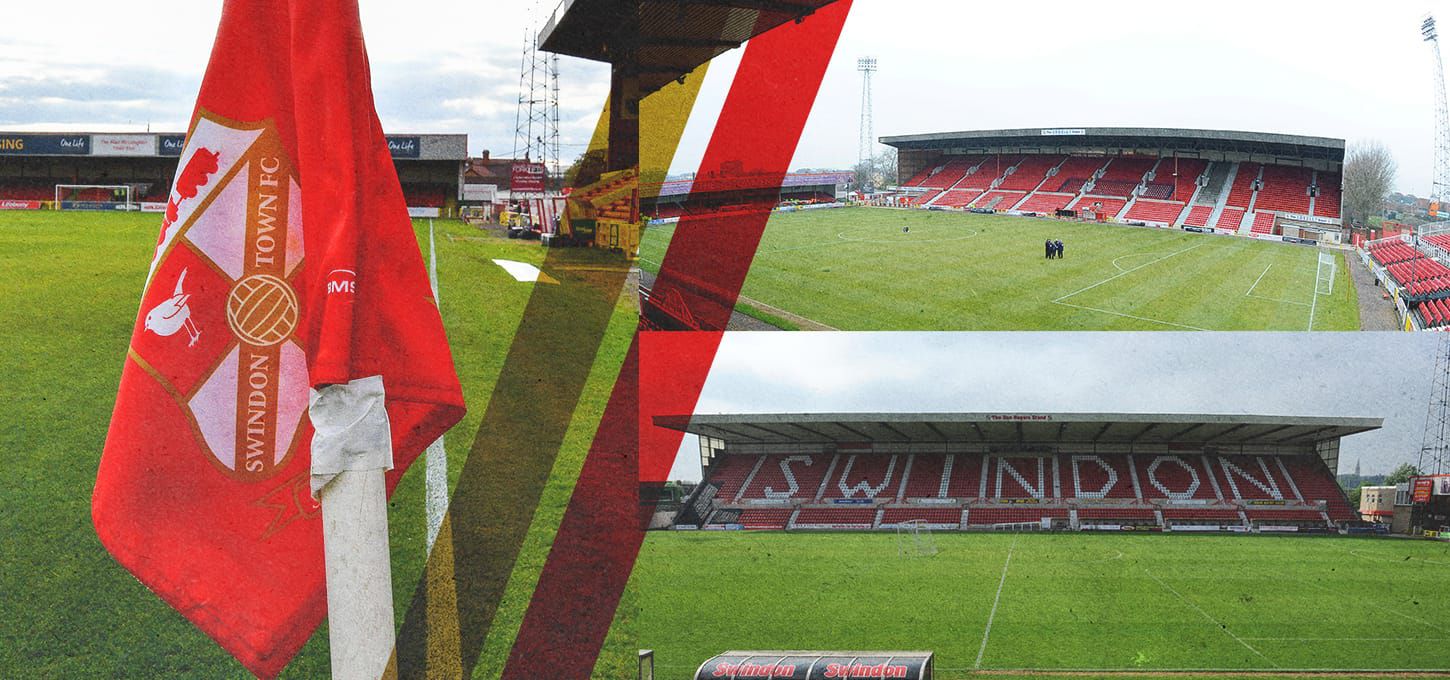
It would be about as easy to take the view that Swindon are well-placed to mount another promotion challenge, as it would be to dub them League Two’s basket case set for capitulation.
The Reds were an exciting, attacking team last season, scoring 55 goals and taking 61 points from their first 33 games, which had them sitting pretty in second by mid-February.
A combination, however, of the loan recall of flying wing-back Finley Munroe, plus injuries to technical forward Paul Glatzel, destructive utility man Ollie Clarke and dominant defensive organiser Ryan Tafazolli, contributed to a closing return of just 14 points and 15 goals from 13 games.
So, on the one hand, Swindon do retain a top seven-capable squad, including the aforementioned Glatzel, who could be back from a long-term lay-off, Clarke and Tafazolli.
Experienced goalkeeper Connor Ripley, all-action midfielder Tom Nichols, playmaker Gavin Kilkenny, energetic wing-back Joe Snowdon are all accomplished footballers at this level, likewise industrious forward Aaron Drinan - who won League Two Player of the Year last season with 22 goals.
They’ve added to that, too, with solid operators in midfielder Matty Virtue and wing-back Mitch Clark, who will cover a lot of ground, plus the aggressive Stephan Negru, and on-loan fellow centre-back James Debayo: parent club Hull feel he has a chance.
With that in mind, the best-case scenario feels plausible – yet success is not simply achieved based on the quality of the squad on paper, it’s more than that.
There are factors like the stability of the club, it’s infrastructural strength, the connection between key figures and supporters, the tactical consistency of the team, the fitness and availability of the squad, and the general feeling around the place: in any or all of those categories, Swindon could easily fall down.
Firstly, they have an owner in Clem Morfuni trying to register a new debenture against the club, which needed objection from the Trust to stabilise matters.
When issues of that ilk got raised at the last fans forum, after the previous one didn’t even have fans in the room, Morfuni avoided the big questions by being awkward, standoffish and somewhat economical with the truth.
There seems to be an internal echo chamber at Swindon, with Morfuni, CEO Anthony Hall and manager Ian Holloway seeming unhealthily close with one another.
Their connection has the advantage of Holloway making life easier for himself by creating a smooth working relationship, but the significant disadvantage of it feeling at times like a case of those three against the fans, more than Swindon against their opposition.
Meanwhile, there’s evidence that Holloway’s heavy rotation policy, and propensity to change his mind on the day of the game, may have caused issues by the end of the season, based on Billy Bodin’s interview with BBC Wiltshire Sport in May.
The Bristolian is at limited availability, too: Kilkenny is out until Christmas, target man Harry Smith and aggressive wing-back Joel McGregor are sidelined until autumn, while Tafazolli, Clarke and Snowdon have got very few minutes under their belts in pre-season due to injury.
All these issues may compound for Swindon, and Holloway’s relationship with the hierarchy may mean if things go awry, the management won’t change until it’s last chance saloon – in the worst-case scenario, that is.
This could go either way…
19. Fleetwood Town
It’s been a sobering three years for Fleetwood.
Andy Pilley is a father figure of the club, for his enormous contribution to their six promotions in nine years, then another decade in League One, but the energy businessman was convicted for fraud in 2023.
It’s hard to say whether the toll on the Fylde coast club, who have since gone from 13th in League One to 15th in League Two, has been greater financially or psychologically.
On the surface, cuts have been made and Town came very close to matching their bottom half budgetary ranking last season, so it’s hardly surprising when, no longer able to afford League One capable players, results take a hit – but there may be more to it than that.
It’s easy for outsiders to judge Pilley in accordance with his criminal activity, whereas him and the Cod Army have been through such an incredible journey together, that asking the fanbase to drastically change how they relate to somebody they’ve adored for a quarter of a century feels almost unfair.
As such, the club find themselves stuck. Their extrinsic need to rehabilitate their image in the public eye and turn a new leaf, conflicts with their intrinsic inclination to honour Pilley as a club icon and, given his son Jamie is owner, perhaps even preserve some form of influence for Andy from afar.
When you have a tension between those two contradicting positions, there’s a chance it might cloud clarity, increase discomfort and blur ethical boundaries, in a way that may risk incrementally eroding the club’s sense of purpose and direction.
That’s not to say they don’t have some good players within their group, though.
The Trawlermen possess two tremendously talented, cultured homegrown defenders in Finley Potter and Conor Haughey, plus one of League Two’s top ball-winners in Harrison Neal, who should forge a solid midfield pairing with the experienced Andy Cannon, who joins from Wrexham.
They also boast creativity, in Mark Helm, who’s caught the eye in League One before with Burton, and in intelligent left wing-back Denver Hume, who topped the assist charts at this level with Grimsby in 2024-25.
Having scored nine goals in the first half of that same season, Ronan Coughlan hopes to recapture his pre-injury form: the 29-year-old has great movement and can run defences ragged on his day.
Don’t sleep on Lewis McCann, either: many point to the sale of star striker Ryan Graydon as a catalyst for last season's drop in form, but the striker-turned-wing-back’s injury at Port Vale in the FA Cup was another significant factor.
The 25-year-old is a powerful runner at 6’4” who can really motor once he gets going and, if he can regain full fitness in pre-season, could be one to watch.
There’s some room for optimism, too, over performances under Matt Lawlor from February onwards last season, with only five defeats in 20, including nine draws of which a few could easily have been more.
Lawlor might well be a good coach, on the indications on that lean positive – but ultimately you need a bit more than that.
The politics of the job is the biggest aspect of managing Fleetwood right now, and quite how well a rookie is going to handle that facet is to be seen.
The playing squad, pound-for-pound, is midtable standard, and maybe they’ve even got eight who are capable of more – but there’s other factors at play that might compromise efforts to make a new start.
20. Shrewsbury Town
It might be a fate the club were more accustomed to at their former home, Gay Meadow, but Shrewsbury Town are currently treading water.
It seems increasingly unlikely that the club can make any meaningful progress under 85-year-old Roland Wycherley’s ownership regime, which seems to have run it’s natural course, 30 years after he saved the debt-stricken club.
Numerous takeover attempts have fallen through in recent years: Wycherley would argue he’s protecting the club in an industry that often attracts the wrong people, whereas his critics feel he’s holding onto power unnecessarily, and outstaying his welcome.
CEO Liam Dooley looks capable of stabilizing things in the meantime, but there’s only so much he and others can do on ever-decreasing resources, as last season showed.
The Shrews didn’t have the personnel to implement Michael Appleton’s ideas, and the Mancunian left the club languishing in 21st in January, to be replaced by Gavin Cowan.
The former Brackley boss simplified things, which gave his new side the foundations to go on to win five in a row from his third game in charge, making survival a formality.
Now, they seek to climb the league with what looks like a 3-5-2 system built around flying wing-backs and numbers in the box, and there does seem to be a clear path to creating chances.
With the insurance of one of League Two’s best outside centre-halves in Luca Hoole, right wing-back Arkell Jude-Boyd could, in his more advanced role, be freed up to replicate the flashes of individual skill and explosivity he showed at Cheltenham, more consistently.
They have two up-and-coming midfield talents in Jay Turner-Cooke and newly contracted homegrown prodigy Will Gray progressing the ball forward: the latter could command a king’s ransom next summer if his season goes as hoped, after signing a three-year deal.
With that platform, they may look to rain crosses in, from Jude-Boyd, plus Kevin Berkoe on the other side, for 6’4” box-crasher Isaac Fletcher, plus two strikers – so it’s just the small matter of whether those strikers will put the chances away.
Josh Davison and George Lloyd both have an insatiable work ethic, but the former was wasteful at Tranmere, while the latter is yet to score more than five league goals in a season at 26.
Alternatively, Joe Gbodé, on loan from Luton, boasts searing pace – but is he going to score goals from crosses, if that’s what Salop are going for?
Plus, while Shrewsbury have 12-15 players in whom they can have at least a modicum of belief that they can hold their own at this level, they look light on depth.
Without a strong end to the window, injuries in the wrong areas could slow down the progress Cowan seeks.
21. Exeter City
Four years ago, Matt Taylor led Exeter City to promotion from League Two, and the celebrations that night symbolised the feel-good factor around St James Park.
The joy wasn’t just about the club going up, it was about the pride supporters felt in their club and how it operated. The sense of community and togetherness.
They represented a shining beacon for the power of fan ownership in English football, and the iconic Supporters Trust sign “We Own Our Football Club” was like a badge of honour.
In the last year, however, fans haven’t felt like they truly own their football club: rather, like people who merely hold a stake.
A seemingly lax internal system of presumably vague and/or infrequent communication from the Supporters Trust, enabled now departed individual of questionable motives to spectacularly mismanage the club’s finances through over-ambitious projections.
The gross negligence was such that the club loaned a six-figure fee from the Trust to pay key bills, a truth that was initially kept under wraps, but the hope is that the short period of carelessness and secrecy is at an end.
Wilf Walsh has been appointed club chairman, and already the communication looks stronger and sharper, with the help of new Managing Director, Matt Roach, among others.
On the football side, meanwhile, City have the direct honesty of Matt Taylor, and the institutional loyalty of Marcus Flitcroft, as Manager and Technical Director respectively.
As reliable as those men should be, it doesn’t change City’s budgetary limitations, that mean the club can’t make new signings without offloading players, although they’ve sold defender Johnly Yfeko to Kilmarnock since that proclamation.
Top goalscorer Jayden Wareham almost certainly won’t be remaining, and attacking midfielder Reece Cole will attract interest too, and the club will be glad to have those situations resolved one way or another to provide clarity – because the squad isn’t in the best of shape.
The defensive spine looks ok, with Jack Bycroft and Jake Doyle-Hayes bringing solidity in goal and midfield respectively, likewise Jack Fitzwater in defence.
An intelligent centre-back who picks his battles, Fitzwater comes off the back of his best season in Devon, and will be flanked by ball-player Ed Turns and homegrown one-to-watch Ed James, who will be out to prove two Ed’s are better than one.
Fellow academy graduates Pedro Elawar and Charlie Cummins also have plenty of talent in midfield, with the former being a lovely ball-carrier, and the later an imposing presence at 6’3”.
The attacking and wide areas, however, look very dry, should key departures happen as expected.
There probably isn’t another club in the league that would have been interested in Josh Gordon or Gwion Edwards, who have been recruited to provide some semblance of Football League knowhow to a group that’s vastly inexperienced in certain areas.
My unpopular opinion? If Exeter can survive, have a lucrative cup run and come out of 2026-27 with a squad that’s appreciated significantly in value, it’s been a good 12 months’ work.
22. Crawley Town
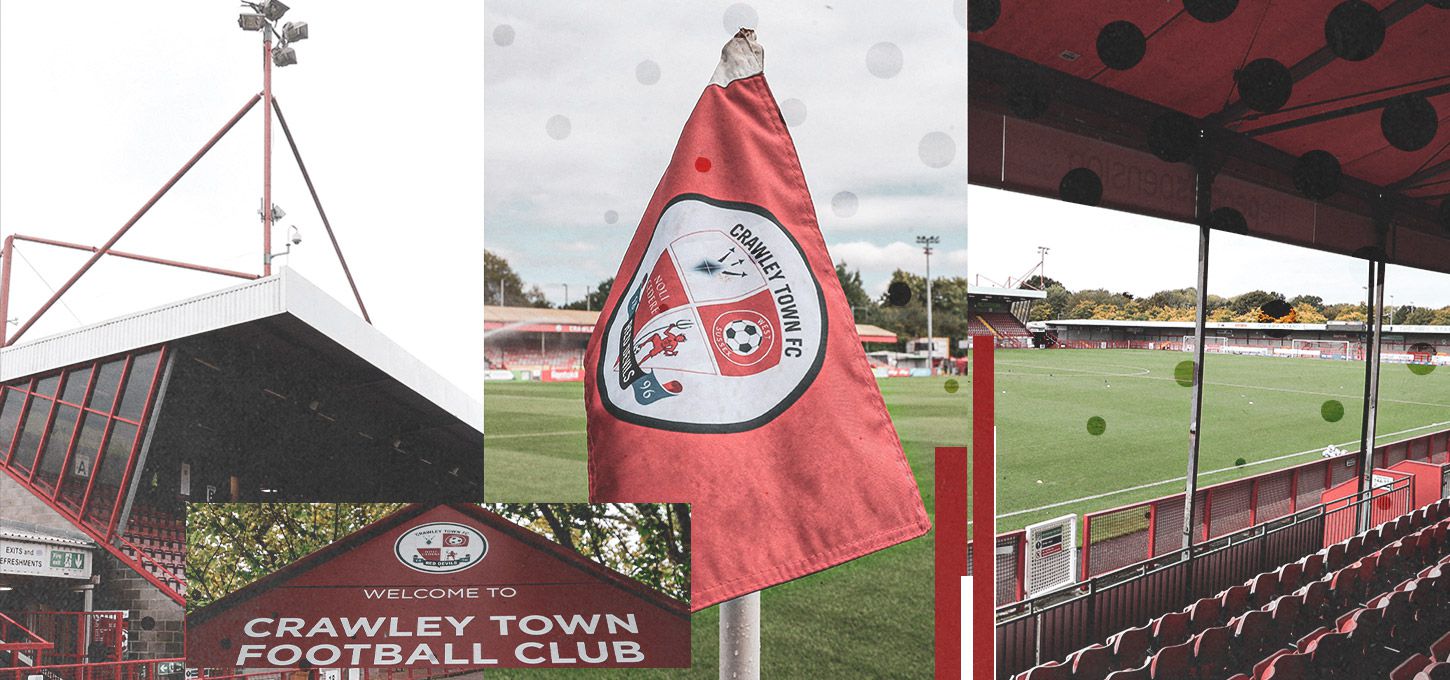
The past year has brought an end to the wacky WAGMI United era at Crawley Town, instead bringing in more stability under KB Sports and Leisure - that was the idea anyway.
Has it panned out that way? Yes and no.
The off-field chaos feels less pronounced under new chairman Raphael Khalili, who seems to have greater PR nous than his predecessor, but without fully addressing some clear structural issues.
Khalili’s management style is better, but still a trifle circuitous, and he put the business side of recruitment last summer in the wrong hands, which led to a slow summer of missed targets, and ultimately 14 signings of which just three started more than a third of league games.
Scott Lindsey carried the can for that, and was dismissed in March, with Colin Kazim-Richards delivering the nine points from seven games that were required for the Reds to stay up with a nervy final day point.
The fanbase, then, take some hope from the signs that this summer’s recruitment looks more proactive than the last.
Firstly, intelligent forward Gianmarco Di Biase is poached from Juventus, after averaging a goal every 200 minutes in a brief spell on loan at Bra in Serie C, with a promising xG (the Italian third-tier is regionalised, but it’s still professional and believed to be of a comparable objective standard to League Two, even if different in style).
Elsewhere, defender Pele Arganese-McDermott arrives with a glowing character reference from Tottenham Under-21s coach Wayne Burnett, and incoming right-back Omari Mrisho was highly-regarded at Huddersfield for his athleticism and canny movement.
In terms of loans, Blackburn goalkeeper Nicholas Michalski is an England Under-19s international, while Hull’s attacking midfielder, Nathan Tinsdale, featured for the first team last season but got injured at a bad time.
The 20-year-old’s option was exercised by the Premier League club in the summer, highlighting their belief in his talents, which should extend to great versatility, oodles of creativity, and an aptitude for a neat, bottom-corner finish.
No question, then, that Crawley have assembled lots of exciting talent at Broadfield.
There is a question, however, around whether this was the summer to go all in on talent, when the club needs a cultural reset after the chaos of the last two seasons, because they still don’t have an obvious leadership group.
Captain Jay Williams was rumoured to be moving on, having only played 20 minutes of pre-season, and while Charlie Barker has the potential to step up - with a name suggesting vocality - it’s a big ask at 23.
What the club needed was to start with a core of vocal leaders and cultural architects to set the tone, get the rebuild off the ground, then drip-feed fresh talent into that structure.
What they’ve done instead, is recruit yet more gifted enigmas, like Stephen Duke-McKenna and Malcolm Ebiowei, and youngsters finding their way in the game, who won’t necessarily have the right voices guiding them.
For that matter, there’s still the question as to how good Colin Kazim-Richards is, with fans split on the decision to renew his contract at the end of last season: some felt he’d earned it for securing survival, while others didn’t quite see enough.
The former Derby striker takes his time in interviews, coming out with illustrative and sometimes excessively analogical language.
In an ideal world, we’d appreciate him for being creative and expressive, yet in this cut-throat media landscape in which perception can shape reality, sadly the optics are everything.
In terms of those optics, he does occasionally carry the impression of somebody not quite demonstrating absolute razor-sharp focus, and even if that’s the most unfair statement ever uttered, the perception can still impact how fans and players respond to him, especially in difficult moments.
Having those question marks over management isn’t ideal, when there are others over the leadership of the team, and the structural integrity of the club.
In March’s fans forum, Khalili came across better than his predecessor, but far from flawless.
The hierarchy seemed to use the very urgency of Crawley Town’s relegation battle that their bad summer caused them as a means to evade, rather than a reason to accept, full accountability.
If that mentality filters down, the amount of talent you have can become almost irrelevant.
This could be a close shave…
23. Accrington Stanley
It’s two-and-a-half years since legendary manager John Coleman was sacked by owner Andy Holt, but the infamous decision, and acrimonious nature of it, remains something of an old wound.
Accrington Stanley have since been competitive under John Doolan who, objectively speaking, has done well to attain respectable 21st and 16th-placed finishes on a budget barely exceeding £1M: peanuts in the current climate.
Cobbling together a squad of veterans, youngsters, and players who may not have got Football League offers at any other club, whilst losing at least one key man in each of the last four windows, Doolan’s side had banked the points required for survival as early as the first week of February.
And yet, much like the acclaimed Netflix drama series, it still feels like the post-Coleman era at The Crown.
As opposed, that is, to the Doolan era, even if results suggest he’s earned some backing. Crowds have dropped slightly from 2.7K to 2.3K, and the success the club previously had around the late 2010s in giving shirts to local schools to attract the next generation, now has less momentum.
The East Lancashire outfit needs new ownership to provide fresh impetus, not to mention a budget that isn’t comfortably the division’s lowest, yet with no such change in sight, the club is treading Hyndburn water.
Tread it, they have, though, through shrewd use of loans, most recently with goalkeeper Ollie Wright and winger Isaac Heath last season, and they’ve hoping to utilise that market effectively once again, but have been prepared to play the waiting game.
In the meantime, they’ve permanently added defender Tom Moore and attacking midfielder Stefan Mols, who arrive with good reviews from non-league Southport and Tamworth respectively.
Elsewhere, striker Cole Stockton arrives with a good goalscoring record, but he’s looked frustratingly languid in the last four years, as the more industrious 2021-22 Morecambe iteration of the striker feels increasingly distant with each passing season.
Stanley’s left side could be an area of vulnerability, too. Wide defender Joe Anderson arrives from Barrow with critical reviews.
Maybe he just didn’t have a midfield in front of him at Holker Street, and with the right protection could get back to the potential he showed to earn a professional contract at Everton in 2019, but there has to be a question mark for now.
Wing-back David Tutonda joins with a reputation for being defensively suspect, and while he can also be bright going forward, the jury’s out on whether he’ll be productive enough to outweigh the downside.
Reliable operators remain, in aerial powerhouse defender Farrend Rawson and evergreen winger Shaun Whalley, but fellow veteran Seamus Conneely’s powers are waning, in terms of anything beyond cultural impact and shoring up the midfield from the bench.
Elsewhere, key defender Devon Matthews has been heavily linked away, young right-back Connor O’Brien wasn’t as influential in 2025-26 as he was the year before, nor was attacker Tyler Walton, who missed two thirds of it through injury after 14 goal involvements in 2024-25.
Much rests, then, on whether shot-happy fan favourite Alex Henderson can earn more opportunities, and start to find his range.
If he does, Matthews stays, Walton and O’Brien rekindle prior form, Stockton can be motivated, Moore and Mols step up successfully, Whalley keeps his pace for yet another year, Anderson proves Barrow fans wrong and the club strike gold in the loan market, Stanley could keep the bottom two at arm’s length.
That relies on a lot of moving pieces falling into place, though, in arguably the most challenging phase of the club’s modern era.
24. Newport County
Since reaching two Play-Off Finals in three seasons under Michael Flynn, in 2018-19 and 2020-21, Newport County have finished with a lower points total than in the previous campaign in each of the last five seasons.
Responsible for two of those campaigns, owner Huw Jenkins has been unable to arrest the slide: the Exiles might have more money under him than they did as a fan-owned club, but seemingly not by much, and his developmental vision has backfired alarmingly.
They had a semblance of hope when rookie coach Christian Fuchs delivered 32 points from 30 games in charge to keep them up on the final day of last season, after 11 from the first 14 left them in the mire – but the Austrian left ambiguously in late June.
The South Wales outfit are down to four known quantities in their squad, in key centre-back Lee Jenkins and ‘Swiss army knife’ Cameron Evans, plus Harrison Biggins and James Crole.
Biggins and Crole bring plenty of aggression, and hopefully goals, in their respective attacking midfield and striker roles, but the latter will miss the start of the season with an ankle problem.
There may be a chance that Cam Norman can make the quartet a quintet, after rejoining from Tranmere Rovers.
The former County stalwart, however, had a very rough time of things at Prenton Park – so it all depends on whether his better connection with this fanbase can aid performance.
Kieron Evans also knows the Amber Army, from his loan spell in 2024-25, and the diminutive midfielder re-acquaints off the back of a positive campaign in the National League with Eastleigh – but otherwise, the recruitment does little to inspire.
Yes, Kyle Cameron arrives with a League Two winner’s medal, but that was arguably more due to slotting into a setup that was already solid than individual performance, and the 29-year-old is yet to convince above the National League.
Fellow defender Dan Sassi joins from Blackpool, with a reputation for being decent but error-prone at Altrincham, while the club has also looked to non-league for attacking options.
Of those, Shaquille Gwengwe looks by far the most exciting profile, in theory, after scoring 41 goals for Poole Town in the Southern Premier League.
Raw pace was his trump card at step-3 level, against slow and error-prone defences, and a three-league step-up could be too much, before he’s expanded his game.
The alternatives, however, are Forest Green recruits Christian Doidge and Yayha Bamba; the former is a 33-year-old target man who might be useful in the dressing room but is past his best, while the latter is way off the technical standard required in professional football.
It’s one thing going into non-league for genuine talent, but the concern for Newport would be that they’re having to be quite explorative with their recruitment from even those levels, which suggests they could end up with a group that’s not up to this one.
If you squint, they might already have six of a starting XI capable of staying up if everyone’s fully fit, and Matt Smith can find sharpness and start to look like the playmaker the club thought they’d got last summer.
Even then, however, Smith would need a powerful, destructive midfielder alongside him, and Newport don’t have that at the time of writing: they’re also short at left-back and out wide, with the jury out on Jordan Wright between the sticks as well.
It’s hard to say with much confidence that they’ll bring in the five additions they need to complete a competitive XI, let alone the depth.
Suffice to say, survival would have to incorporate, for starters, several arcs of defiance along the way.